Moving & living guide · the Netherlands
Indians in the Netherlands: the 2026 guide to the knowledge-migrant permit, the 30% ruling, housing and the community
The Netherlands has the largest Indian community in the Benelux and one of the fastest-growing in Europe: 99,014 people of Indian background on 1 January 2026, up from 27,000 in 2014, most of them knowledge migrants in IT and engineering in Amsterdam and Amstelveen, Eindhoven, The Hague, Rotterdam and Utrecht — alongside a Surinamese-Hindustani community of 160,000–185,000 that built the country’s temples. This guide sets out the two-week knowledge-migrant permit and its 2026 thresholds, the 30% ruling and the tax brackets, the five-day BSN registration and compulsory health insurance, the housing crisis and the laws that protect tenants, schools and childcare, transport and the licence rule, and where the mandirs, gurdwaras, grocers, associations and festivals are — with the Hindustani, Nepali, Sri Lankan, Pakistani and Bangladeshi communities included.
1.The Netherlands at a glance
Correct or addContents ↑The Netherlands is a flat, dense, bilingual-in-practice country of 18.1 million people (1 January 2026) where English works almost everywhere, the trains run every few minutes, the bicycle is a form of transport rather than a hobby, and the housing market is the hardest problem in national politics. It has the largest Indian community in mainland western Europe after Germany and the United Kingdom, and one with two distinct halves: the Surinamese-Hindustani community — some 163,000 to 185,000 people descended from the indentured labourers shipped from Bihar and Uttar Pradesh to Suriname between 1873 and 1916, who came to the Netherlands around Surinamese independence in 1975 and built the temples, mandirs and roti shops of The Hague, Rotterdam and Amsterdam Zuidoost — and the Indian expat community, which barely existed in 2000 and is now 99,014 people of Indian background (1 January 2026), up from 27,000 in 2014, most of them knowledge migrants in IT and engineering and their families.
The two halves overlap at the mandir and the Diwali stage and diverge almost everywhere else, and a newcomer from India will find both useful: the Hindustani community built the infrastructure, the expat community built the WhatsApp groups. India's Ministry of External Affairs counts about 234,000 overseas Indians in the Netherlands as of January 2026 (roughly 56,000 citizens and 178,000 people of Indian origin, the latter figure including the Hindustani community). Indians are the number one nationality for the Dutch highly-skilled-migrant permit — 19,490 "knowledge and talent" applications in 2025, 86% approved — and for family permits, second for study permits, and second for naturalisation. Amstelveen, Eindhoven and Almere are the municipalities with the highest share of Indian residents; Amsterdam has the most in absolute terms.
| Essential | What / where |
|---|---|
| Population | 18,131,238 (1 Jan 2026) |
| Indians | 99,014 of Indian background (CBS, 1 Jan 2026) · about 234,000 overseas Indians (MEA, Jan 2026, incl. Surinamese-Hindustanis) |
| Work permit | The highly skilled migrant (kennismigrant) permit, filed by an IND-recognised sponsor, decided in about two weeks |
| Salary thresholds 2026 (gross/month) | €5,942 aged 30+ · €4,357 under 30 · €3,122 after the orientation year · Blue Card €5,942 |
| The tax break | The 30% ruling: 30% of salary tax-free in 2026, 27% from 2027, for five years, salary norm €48,013 |
| Rent | Free-sector average €1,882 a month, €20.94/m² (Q2 2026); Amsterdam €28.69/m²; deposit max 2 months |
| Health insurance | Compulsory within four months of arrival; average basic premium €159.30 a month (2026), €385 deductible |
| Driving licence | An Indian licence cannot be exchanged — unless you hold a 30% ruling, in which case any licence can |
| Embassy of India | Oranjestraat 12, The Hague; passports and OCI at the embassy itself since VFS left on 1 June 2025 |
| Where the community is | Amsterdam and Amstelveen, Eindhoven and Veldhoven, The Hague, Rotterdam, Utrecht, Almere |
This is the country guide: the sequence of moving from India, the permits, the 30% ruling and tax, housing and its laws, health, schools, transport and the licence rule, and where the temples, gurdwaras, associations and festivals are. The city guides for Amsterdam, Amstelveen, The Hague, Eindhoven, Rotterdam and Utrecht carry the street-level detail.
2.Where Indians live in the Netherlands: the cities
Correct or addContents ↑The Netherlands is small and the Randstad — Amsterdam, The Hague, Rotterdam and Utrecht, with everything between — is one urban region; Eindhoven, an hour and a half south, is the other pole. Rents are the Pararius free-sector asking rent per square metre for the second quarter of 2026; Indian-background counts are CBS figures for 1 January 2026.
| City | Indian-background residents (2026) | Who is there and why | Rent (€/m², Q2 2026) |
|---|---|---|---|
| Amsterdam | 10,895 (the most of any municipality) | Booking, Uber, Adyen, the banks, TCS's European headquarters, Philips; the Zuidoost Hindustani community and the Shiva temple; the ISKCON centre in De Pijp | €28.69 — the dearest in the country |
| Amstelveen | 5,955 (6.2% of the town — "Little India") | KLM, KPMG, Canon; ten minutes from Amsterdam Zuid on tram 25; four Indian supermarkets, the Diwali festival on the Stadsplein, the International School of Amsterdam and Amity | €25.10 |
| Eindhoven | 9,507 (plus Veldhoven 1,043) | ASML in Veldhoven, Philips, NXP, the High Tech Campus and TU/e — the fastest-growing Indian community, with two mandirs, ISKCON, a gurdwara in Geldrop and a Ganesh procession through the centre | €20.25, rising fastest (+11.9%) |
| The Hague | 6,407 (plus Delft 2,138, Leidschendam-Voorburg 1,465) | The seat of government, Shell, the international institutions, the Embassy of India; the largest Hindustani community and the Paul Krugerlaan shopping street; the Milan festival | €22.42 |
| Rotterdam | 4,548 | The port, Erasmus MC, Unilever; the Hindustani temples of Rotterdam-Zuid including the oldest in the country | €22.79 |
| Utrecht | 5,098 (plus Nieuwegein 1,856) | Rabobank, the railways, the university hospital; the geographic centre of the network; Leidsche Rijn for families | €21.61 |
| Almere | 9,147 | Amsterdam's overflow city across the water: new houses at lower prices, a gurdwara, two Durga Pujas | below the big five |
| Haarlemmermeer (Hoofddorp), Diemen, Delft | 4,611 · 507 · 2,138 | Schiphol's employers; the Amsterdam fringe; TU Delft | — |
How to choose
Three questions settle it. Where is the job? Eindhoven's community is ASML's and Philips'; Amsterdam's is tech and finance; The Hague's is Shell and the state; nobody commutes from Eindhoven to Amsterdam. A flat in the city or a house outside it? Amstelveen, Almere, Nieuwegein, Veldhoven, Rijswijk and Capelle are where families go for space, schools and a garden, all within twenty minutes of the city they left. Do you want the expat community or the Hindustani one? Amstelveen and Eindhoven are expat; The Hague's Transvaal and Rotterdam-Zuid are Hindustani, with the temples, the roti and the older, deeper roots; Amsterdam has both.
3.Moving to the Netherlands from India: the sequence
Correct or addContents ↑The Dutch procedure is the fastest in Europe for the highly skilled, because the employer does almost all of it.
- A job offer from an IND-recognised sponsor. Only a company on the IND's public register of recognised sponsors can hire a knowledge migrant; the large employers, the IT services firms and the universities all are. A start-up that is not yet recognised must first apply (€5,080, or €2,539 for small firms).
- The sponsor files the TEV application — the entry visa (MVV) and the residence permit in one — with the IND, with your contract at or above the salary threshold (€5,942 gross a month for those aged 30 and over in 2026, €4,357 under 30, excluding the 8% holiday allowance), your passport and, for a Blue Card, your degree. Fee €423. The IND aims to decide within two weeks for recognised sponsors (the legal maximum is 90 days). Family members are included in the same application (€254 each).
- Apostille and legalise your marriage certificate and children's birth certificates through the MEA (India and the Netherlands are both in the Hague Convention); the municipality will want them for the family's registration.
- Collect the MVV sticker at the Embassy of India's Dutch counterpart — the Netherlands embassy in New Delhi or the consulate in Mumbai via VFS — within three months of approval; biometrics are taken there.
- Fly. KLM flies nonstop from Amsterdam to Delhi, Mumbai and Bengaluru; Air India also serves Amsterdam. Schiphol is the airport for the whole country — twenty minutes to Amsterdam, forty to Utrecht, an hour and a half to Eindhoven by train.
- Register at the municipality within five days (the BRP registration, which gives you your BSN, the citizen service number everything keys off) — at the expat centre if your employer is in a participating city (IN Amsterdam, the Holland Expat Center South in Eindhoven, The Hague International Centre, the Rotterdam Expat Centre, the Utrecht International Center), which does the registration, the BSN and the residence-permit collection in one appointment; otherwise at the city hall. Apostilled birth certificates are needed for the family.
- Collect the residence card from the IND (at the expat centre or an IND desk), and book the tuberculosis test at the GGD within three months — Indian, Nepali, Pakistani and Bangladeshi nationals are not exempt; Sri Lankans are.
- In the first month: health insurance (compulsory within four months, backdated to arrival), a bank account (with the BSN), DigiD (the digital identity, which needs the BSN), a phone, and the 30% ruling application by your employer within four months of starting.
Packing and practicalities
Type C and F sockets at 230 V (Indian type C plugs fit). Bring three months of any prescription medicine with the prescription; pharmacies stock most things under different names, and many common Indian over-the-counter medicines are prescription-only here. Winters are wet and windy rather than cold; summers mild. Cards and phone payments are universal (some shops refuse cash, and many refuse foreign credit cards in favour of debit), and a Dutch bank account with a Maestro or debit card is the first thing to arrange. Tap water is drinkable. A bicycle is not optional.
4.Residence permits: the knowledge migrant, the Blue Card, students, family, permanent residence and nationality
Correct or addContents ↑The IND (Immigration and Naturalisation Service) is the single national authority, and its website is clear, in English, and current.
The highly skilled migrant (kennismigrant)
The route most Indians take: a contract with a recognised sponsor at or above the salary threshold, no labour-market test, no degree requirement, a decision in about two weeks, a permit for the length of the contract up to five years, and free movement between recognised sponsors. The 2026 thresholds (gross per month, excluding the 8% holiday allowance): €5,942 aged 30 and over, €4,357 under 30, €3,122 for those who graduated in the Netherlands or from a top-200 university and come in after the orientation year. Fixed allowances and a contractual thirteenth month count toward the threshold if paid monthly; holiday pay, bonuses and benefits in kind do not. The threshold is checked at every change and the employer must keep paying it.
The EU Blue Card
The same salary as the 30+ knowledge-migrant threshold (€5,942; €4,754 for recent graduates) but with a degree requirement and a six-month minimum contract, in exchange for easier intra-EU mobility and a faster path to long-term residence. Most employers file the knowledge-migrant permit instead.
Losing the job
A knowledge migrant who loses the job has a search period of three months while the permit is valid to find a new recognised sponsor — extended to six months for anyone made unemployed after 22 May 2026 who has held the permit for at least two years. If no sponsor registers you within it, the permit is withdrawn, and family members' derivative permits fall with it. Unemployment benefit (WW) is available to knowledge migrants like any employee but does not extend the permit.
Students and the orientation year
A student permit needs an admission letter and proof of €1,130.77 a month in 2026; students may work 16 hours a week (the employer needs a free work permit from the UWV) or full-time in June to August. After graduating — from a Dutch institution or a top-200 university anywhere — the orientation year (zoekjaar) gives twelve months of free labour-market access, applied for within three years of graduating (€254), and leads into the reduced knowledge-migrant threshold of €3,122.
Family
A spouse or registered partner and minor children can come with the knowledge migrant in the same application (€254 each); the partner gets free access to the labour market and is exempt from the civic-integration exam abroad. A resident sponsoring a partner independently must show income of at least €2,477.95 gross a month (first half of 2026).
Civic integration
The 2021 Civic Integration Act does not apply to knowledge migrants, Blue Card holders, researchers or students — their stay is legally "temporary in purpose" — nor to their family members. It applies to those who settle through family reunification with a Dutch or permanent resident, and to refugees; they must reach B1 (or A1 on the self-reliance route) within three years, paying for the courses themselves unless they are refugees.
After five years
Permanent residence after five consecutive years on a non-temporary permit (a knowledge migrant's permit counts), with sufficient income and the civic-integration exam at A2 (€254). Dutch nationality by naturalisation after five years (three with a Dutch partner), the A2 exam — a rise to B1 has been proposed and, as of this guide's check, not enacted — and, in principle, renunciation of your other nationality; India does not permit dual citizenship, so naturalising means surrendering the Indian passport and applying for an OCI card. Fee €1,139 (€1,454 with a partner, €168 per child). Indians were the second-largest nationality applying for naturalisation in 2025.
5.Money and tax: the 30% ruling, the brackets, banks and the agreements with India
Correct or addContents ↑The 30% ruling
The reason the Netherlands pays what it does: an employee recruited from abroad who earns above the salary norm (€48,013 in 2026; €36,497 for under-30s with a master's) can receive 30% of salary tax-free as an expense allowance, for five years, provided they lived more than 150 km from the Dutch border for at least 16 of the previous 24 months. The rate is 30% for 2025 and 2026 and 27% from 1 January 2027 for anyone who started in 2024 or later (earlier starters keep 30% for their term); the allowance is capped at the public-sector pay norm (€262,000 in 2026, so at most €78,600 untaxed); the 30/20/10 step-down enacted in 2024 was reversed. The employer applies within four months of the start date — ask about it in the offer, and ask whether the employer's contribution to your tax is "gross-up" or "net" because the two are worth very different sums. The ruling also lets you exchange any foreign driving licence, including an Indian one, and opt out of Box 3 tax on foreign assets.
Income tax
Box 1 (employment income) for 2026: 35.75% up to €38,883, 37.56% to €78,426, 49.50% above — with tax credits that make the effective rate far lower at modest incomes. Box 3 taxes assumed returns on savings and investments above an allowance; Box 2 substantial shareholdings. The employer withholds monthly; the annual return is filed online with DigiD by 1 May, and the tax office's pre-filled return makes it a half-hour job for most employees. The 8% holiday allowance (vakantiegeld) is a legal minimum paid in May; a thirteenth month is contractual and common in IT and finance. The minimum wage is €14.71 an hour from January 2026 and €14.99 from July; the modal income is about €48,000 a year and the median personal income of workers about €46,000.
Banking and payments
ING, ABN AMRO, Rabobank and the app banks bunq and Revolut all open accounts with a BSN (bunq without one at first); iDEAL and debit cards are how the country pays, and a Dutch debit card matters because many shops and machines refuse foreign credit cards. DigiD is the digital identity for the tax office, the municipality, the health insurer and the DUO.
The agreements with India
The social security agreement (signed 2009, in force since 2011) lets employees posted by an Indian employer stay in EPF for up to 60 months on a certificate of coverage and totalises insurance periods for pensions; a locally hired knowledge migrant is in the Dutch system, with the state pension (AOW, from 67) accruing 2% for every year of residence and an employer pension on top. The double-taxation agreement dates from 1988; its "most favoured nation" clause on dividend withholding was the subject of a 2023 Indian Supreme Court ruling that ended the 5% rate — a detail for investors, not for salaried people. Sending money home: Wise, Remitly and the like; this guide gives no financial advice. After 182 days outside India in a financial year you are generally a non-resident for Indian tax; an hour with a chartered accountant who handles NRI clients is worth it.
6.Housing: the crisis, the rules that protect tenants, and how to actually find a flat
Correct or addContents ↑Housing is the Dutch problem and every newcomer's first shock. There are too few homes; the free-sector rent a new tenant paid averaged €1,882 a month, or €20.94 per square metre, in the second quarter of 2026 (Amsterdam €28.69, Amstelveen €25.10, Rotterdam €22.79, The Hague €22.42, Utrecht €21.61, Eindhoven €20.25 and rising fastest); landlords are selling rather than letting since the 2024 rent regulation; and a good flat draws dozens of applicants within a day.
The rules (all recent, all tenant-friendly)
- The Affordable Rent Act (July 2024) extended the points system: a home scoring up to 143 points is social housing (maximum €932.93 a month in 2026), 144–186 points is regulated middle rent (maximum €1,228.07 for contracts from 1 January 2026), and only 187 points and above is free-sector. The points are set by size, energy label, amenities and location; the Huurcommissie rules on disputes and can cut a rent that exceeds the points.
- The Good Landlordship Act (July 2023): the deposit is capped at two months' basic rent and must be returned within fourteen days; the tenant may not be charged agency fees; the contract must be written; selection must be transparent and non-discriminatory (nationality and origin are protected); service charges must be itemised; and the municipality runs a reporting point for bad landlords.
- Permanent contracts only, since 1 July 2024: temporary contracts are gone except for students and a short list of cases; the landlord can end a lease only on legal grounds.
- Registration is your right and duty. A landlord who says "no registration allowed" is asking you to break the law that requires you to register in the BRP at your actual address within five days — and without registration there is no BSN, no DigiD, no health insurance. Walk away.
Finding one
Pararius and Funda are the portals; Kamernet for rooms; the expat relocation agencies are worth their fee in Amsterdam and Eindhoven because they hear of flats before the portals do. Have ready: your contract, three pay slips or an employer letter, your passport and permit, and an introduction; landlords ask for income of three to four times the rent. Expect "unfurnished" to mean no floor, no curtains and no light fittings (kaal) and "semi-furnished" (gestoffeerd) to mean floors and curtains; furnished flats carry a premium.
Buying
Many Indian families buy within three years — mortgages run to 100% of the value, interest is deductible, and the transfer tax is 2% for owner-occupiers with an exemption for buyers aged 18–35 on homes up to €555,000 in 2026; the national mortgage guarantee (NHG) covers homes up to €470,000. A 30%-ruling holder's income counts in full.
7.What the Netherlands costs
Correct or addContents ↑Prices sit above Belgium and Germany and below the Nordics, Switzerland and Ireland; rent is the variable that decides everything.
| Item (2026) | Typical price |
|---|---|
| One-bedroom flat, city centre | Amsterdam €2,319 · Rotterdam €1,677 · Utrecht €1,678 · Eindhoven €1,527 · The Hague €1,463 (Numbeo, Sep 2026) |
| Free-sector rent, national average | €1,882 a month · €20.94/m² (Pararius, Q2 2026) |
| Regulated middle rent, maximum | €1,228.07 (2026) |
| Basic health insurance | €159.30 a month average (2026), plus a €385 deductible |
| Single person's spending before rent | €966 (Eindhoven) to €1,136 (Amsterdam) a month (Numbeo) |
| Family of four before rent | €3,489 (Eindhoven) to €4,037 (Amsterdam) |
| Childcare, maximum subsidised hourly rate | €11.23 (daycare), €9.98 (after-school), with up to 96% reimbursed by the childcare allowance for incomes to about €56,000 |
| International school | €5,000–8,000 at the Dutch-subsidised international schools; €15,000–25,000 at the private ones |
| Non-EEA university tuition | About €18,000–26,000 a year for a master's in 2026–27 (TU/e €21,700; TU Delft €25,633) |
| Knowledge-migrant permit · naturalisation | €423 · €1,139 |
| Minimum wage | €14.71 an hour (Jan 2026), €14.99 (Jul 2026) |
| Public transport | Check in with a bank card (OVpay); NS train fares rose in January 2026; a Schiphol–Amsterdam single about €5 |
Two budgets
A single knowledge migrant in a one-bedroom outside the centre of Utrecht, Eindhoven or The Hague spends roughly €2,400–2,800 a month all-in, in Amsterdam €3,000–3,500; a family of four in a three-bedroom about €5,500–6,500, more in Amsterdam, before international-school fees — and the 30% ruling is what makes the arithmetic work for the first five years. Salaries are not indexed automatically as in Belgium and Luxembourg, but the 8% holiday allowance is a legal floor.
8.Health: compulsory insurance, the GP shortage and how the system works
Correct or addContents ↑Dutch healthcare is private-insurance based, uniform, and organised around the general practitioner. Two rules matter in the first month.
Insure within four months
Everyone who lives or works in the Netherlands must take out basic health insurance (basisverzekering) within four months of arrival; cover runs from the day you arrived and premiums are due from then, and missing the deadline brings a fine of €529.74 per notice and compulsory enrolment. The basic package is identical across insurers (GP, hospital, specialists, most medicines, maternity, mental health); premiums for 2026 average €159.30 a month (from about €142 to €185), with a compulsory deductible (eigen risico) of €385 a year that the GP does not count toward. Children under 18 are free. A lower-income household gets the zorgtoeslag allowance toward the premium. Supplementary packages cover dental, physiotherapy and glasses; compare on Zorgwijzer or Independer in November, when everyone may switch.
Register with a GP — and expect a struggle
The huisarts is the gatekeeper: no specialist, no hospital and no prescription without them, except in emergencies. Register with one near home as soon as you have an address — and know that six in ten practices had a patient stop in 2024, that in Haaglanden, the south of South Holland and around Amersfoort three-quarters of practices are closed to new patients, and that Indian expats in particular report weeks of ringing round. The expat centres keep lists; the insurer's helpline can place you; and a practice "over the border" of your postcode may take you if you ask. Once registered, an appointment is usually within days, and the practice's out-of-hours service (huisartsenpost) covers nights and weekends. Dutch GPs prescribe less than Indian doctors — paracetamol and patience are the first answer to most things — which newcomers find alarming and Dutch patients find normal.
Hospitals and emergencies
Every city has a university or regional hospital of high quality; your GP refers you. 112 for emergencies. Pharmacies (apotheek) dispense prescriptions and hold your medication record; the drogist sells the mild over-the-counter things.
Bring from India
A translated summary of any chronic condition, prescriptions with generic names, the children's vaccination records for the consultatiebureau (the child-health clinic, which will call you), and three months of any regular medicine. The tuberculosis test at the GGD within three months of the permit is compulsory for Indian nationals.
9.Work: who hires, Dutch labour law, and what happens when the contract ends
Correct or addContents ↑Who hires
Indian knowledge migrants are, in the CBS's phrase, "mostly IT": the Indian services firms (TCS, whose European headquarters is in Amsterdam; Infosys, Wipro, HCLTech, Tech Mahindra, Cognizant, LTIMindtree), the Dutch and global technology employers (Booking.com, Adyen, Uber, Philips), the semiconductor cluster around ASML in Veldhoven with NXP and the High Tech Campus in Eindhoven, the banks (ING, ABN AMRO, Rabobank), Shell and Unilever, the port of Rotterdam and the logistics firms around Schiphol, and the universities, where India is a large source of PhD candidates. The IND's public register of recognised sponsors is the list of who can hire you.
The rules of a Dutch job
- Probation of at most one month on a contract under two years, two months on a longer or permanent one; no notice during it.
- Notice: one month for the employee; one to four months for the employer by tenure, and dismissal needs a legal ground and either the UWV's or a court's permission, or a settlement.
- Leave: at least four times the weekly working days (20 days full-time), plus the 8% holiday allowance; most collective agreements give 25 or more. Public holidays are few (about eight).
- Sickness: the employer pays at least 70% of salary for up to two years and may not dismiss you meanwhile.
- Part-time is normal and legal to request; four-day weeks are common for parents.
- Pension: the state AOW plus, in most firms, a mandatory sector or company pension.
When the contract ends
The search period — three months, or six for those made unemployed after 22 May 2026 with two years on the permit — is the clock; a new recognised sponsor registers you and the permit continues. WW unemployment benefit is payable but does not stop the clock. Changing employer voluntarily is a notification, not a new application.
Recognition, regulated professions, self-employment
Nuffic's IDW evaluates foreign degrees for employers who ask; doctors, nurses and pharmacists need BIG registration and Dutch; engineers do not. Self-employment on a knowledge-migrant permit is not allowed as the main activity; a start-up permit and a self-employed permit (points-based) exist for founders. Working without Dutch is normal in tech, finance and research and much harder in healthcare, education and the public sector.
10.Studying in the Netherlands: universities, fees, money and the orientation year
Correct or addContents ↑Dutch universities teach almost every master's in English and rank among the best in Europe: Delft, Eindhoven and Twente for engineering; Amsterdam (UvA and VU), Utrecht, Leiden, Groningen, Erasmus in Rotterdam, Wageningen for life sciences, Maastricht. Indians were the second-largest nationality for study permits in 2025 and Indian master's enrolments rose 16.5% even as the total number of international students fell for the first time in twenty years — the government is trying to slow international intake, and English-taught bachelor's programmes are being cut back.
| Item (2026–27) | Figure |
|---|---|
| Non-EEA master's tuition | About €18,000–26,000 a year in 2026–27 for most programmes (Twente €18,200–21,700; TU/e €21,700; TU Delft €25,633; UvA €20,200–37,400 by faculty) |
| EEA tuition, for comparison | about €2,600 |
| Proof of means for the student permit | €1,130.77 a month (higher education), 2026 |
| Permit fee | €254 |
| Working while studying | 16 hours a week (employer needs a free UWV work permit, five weeks' lead time), or full-time June–August |
| NL Scholarship | €5,000, first year, non-EEA bachelor's and master's, through the institution |
| Orientation year after graduating | 12 months, €254, apply within three years of the degree |
Student housing is the hardest part: the universities' housing offices allocate rooms to internationals but never enough, Kamernet and the student housing corporations are the market, and a room in Amsterdam or Utrecht is €700–900. Secure one before you fly; the September scramble is real. After graduating, the orientation year and then the reduced knowledge-migrant threshold (€3,122) are the path most Indian graduates take into ASML, the Amsterdam tech firms or a PhD.
11.Getting around: trains, bikes, OVpay, and why the 30% ruling matters for your licence
Correct or addContents ↑Trains, trams, buses
The Netherlands runs on NS trains — every city to every other several times an hour, Amsterdam–Utrecht in 27 minutes, Amsterdam–Rotterdam in 40, Amsterdam–Eindhoven in 80 — and on the city operators (GVB in Amsterdam, HTM in The Hague, RET in Rotterdam, U-OV in Utrecht, Hermes in Eindhoven). Since 2024 you check in and out with a bank card or phone (OVpay) on everything; the anonymous OV-chipkaart stopped being sold in July 2026 and is being phased out. NS fares rose in January 2026; commuters buy a monthly or annual season ticket, usually employer-paid; off-peak subscriptions cut the cost of leisure travel. Schiphol has its own station under the terminal.
The bicycle
Not optional. Every city is built for it, every station has a bike garage, and a second-hand bike (€100–200) with two locks is the first purchase after the SIM card. Learn the rules — cyclists have their own lanes and lights and are expected to use them — and buy the lights before the police fine you. The OV-fiets rental bikes at stations cover the last mile.
Driving, and the licence rule
An Indian licence is valid for 185 days after you register in the BRP; it cannot be exchanged for a Dutch one (India is not on the list of recognised countries), so the route is the CBR's theory exam and practical test, which most people pass after a course of lessons. The exception is the 30% ruling: a holder of a valid 30%-ruling decision may exchange a licence from any country, all categories, at the municipality — one of the ruling's least-known benefits, and worth several hundred euros of lessons. Family members on the ruling holder's permit qualify too. Cars are expensive to run (fuel, road tax, parking permits with waiting lists of years in Amsterdam), and most Indian families in the cities manage without one for the first year.
Flights home
KLM flies nonstop from Amsterdam to Delhi, Mumbai and Bengaluru, and Air India serves Amsterdam; Schiphol is 20 minutes from Amsterdam by train and under two hours from anywhere.
12.Schools and childcare: the Dutch system, the international schools and the childcare allowance
Correct or addContents ↑Childcare
Daycare (kinderopvang) is private and expensive — but heavily subsidised. The childcare allowance (kinderopvangtoeslag) reimburses up to 96% of a maximum hourly rate (€11.23 for daycare and €9.98 for after-school care in 2026) for household incomes up to about €56,000, sliding down above that, for working parents; apply through the tax office with DigiD. Waiting lists in the cities are long — register in pregnancy. The consultatiebureau (child-health clinic) follows every child from birth with free check-ups and vaccinations.
Schools
Dutch schools are free from age four, compulsory from five, and good; the state, Catholic, Protestant and Montessori schools are all publicly funded and any child may attend any of them. A child who arrives without Dutch goes into a newcomer class (nieuwkomersklas or ISK for secondary) for a year of language before joining the mainstream; children under seven usually skip straight in and are fluent in months. At twelve the system splits into vocational and academic tracks on the primary school's advice — the decision Indian parents find hardest, and worth understanding early.
International schools
The Netherlands has a rare thing: Dutch-subsidised international schools (the AICS in Amsterdam, the International School of The Hague, the International School Eindhoven, the Rotterdam International Secondary School, the International School Utrecht and others) teaching the IB in English at €5,000–8,000 a year rather than €20,000 — with waiting lists of months to years at the entry ages, so apply before you land. The private schools (the International School of Amsterdam and Amity in Amstelveen, the British School of Amsterdam and the British School in the Netherlands in The Hague, the American School of The Hague, Nord Anglia in Rotterdam) cost €15,000–25,000. There is no Indian-curriculum or CBSE school in the Netherlands; Hindi teaching runs through private tutors, the associations and online.
Children born here
Register the birth at the municipality and with the Embassy of India in The Hague, then apply for the child's OCI; a child of two Indian parents born in the Netherlands is Indian and becomes Dutch only by option or with a naturalising parent.
13.Daily life: Dutch, the calendar, the weather and the rules of the road
Correct or addContents ↑Dutch, and whether you need it
You can work, rent, bank, insure and register in English in every Dutch city, and most Indian knowledge migrants do; you cannot deal with the school, the GP's receptionist or the neighbours in it for long without friction, and civic integration — though not required of knowledge migrants — is the road to permanent residence (A2) and nationality. Municipalities and libraries run free or cheap Dutch courses and conversation tables (taalcafé); employers often fund lessons; the university language centres are the serious route. Indian speakers of Hindi, Punjabi or Bengali find Dutch pronunciation easier than French and the word order a year's work.
The calendar and the weather
Few public holidays (New Year, Easter Monday, King's Day on 27 April, Liberation Day every five years, Ascension, Whit Monday, Christmas and Boxing Day); shops open on Sundays in the cities; supermarkets close around 8 or 10 pm. The weather is maritime: 10–11 °C annual mean, wet and windy in every month, short winter days, a heatwave or two in summer. A good rain jacket beats an umbrella on a bicycle. Vitamin D is prescribed to almost every newcomer from India.
Energy, water, waste
The energy market is open (choose a supplier on a comparison site; the grid operators Liander, Stedin and Enexis own the meters); water is regional (Waternet, Evides, Vitens); waste is sorted into residual, GFT (food and garden), paper, PMD (plastic, metal, cartons) and glass, with municipal apps for the collection days and a fixed municipal waste tax.
Habits
Appointments are made and kept; a "gezellig" evening is a compliment; directness is not rudeness; and priority to cyclists is absolute. Bancontact is Belgian — here it is iDEAL, Tikkie and the debit card.
14.Indian groceries and restaurants across the Netherlands
Correct or addContents ↑The Netherlands is the best-supplied country in the Benelux for Indian food, because the Hindustani community has run tokos and roti shops for fifty years and the expat community has added a supermarket in every town it settled in. The city guides carry addresses; the shape of the country:
| City | Grocers | Eating out |
|---|---|---|
| Amstelveen | Four Indian supermarkets — Kashmir Food Store (Lindenlaan 376), Indian Quality Food (Kostverlorenhof 18), Global Food Hub (Westwijkplein 66), Spice Indian Supermarket (Karel Doormanweg 6) — and Masala Express in the centre | The Indian Kitchen and Indian Street Food & Co. on Karel Doormanweg; Diwali Palace, Wah India, Pakwaan, Atchaya |
| Amsterdam | Skyloo and Toko de Poort in Zuidoost; most Amsterdam Indians shop in Amstelveen | Saravana Bhavan on Stadhouderskade and Anjappar on Van Baerlestraat for South Indian; Taj, Pind Punjabi, Surya and Miri Mary in De Pijp; Rasoi, Swagat, Ashoka |
| The Hague | The Paul Krugerlaan in Transvaal — Supermarkt Mittal (no. 50), Bharat Kings (no. 194, since 1972) — India Gate on Hobbemaplein, and Amazing Oriental and Passage to Asia in Ypenburg and Leidschenveen | Krishna Vilas on Hooikade for South Indian; Taj Mahal, Maharani, Atithi, Jaipur of India; the Hindustani roti shops of Transvaal |
| Eindhoven | A dozen, listed by the community: Namaste India (Kastelenplein 82), Sardar Ji (Grote Berg 38), Mama's Regal (Woensel), Sivamani, Sri Satya, Rohit, Sensa, Dbanyan in Meerhoven | Atithi, Krishna Aahar, Dhol & Soul, Touch of India, Lekker India, Rasamayi |
| Rotterdam | Indian Food Store Sardar Ji (West-Kruiskade 87) and Wah Nam Hong on the same street; the Hindustani shops of Zuid | What's Up India, Atithi, Curry House, Royal Indian Tandoori, 91Spices, Sangam |
| Utrecht | Mantra Food on the Kanaalstraat in Lombok | Krishna Vilas, Anjappar, India Port, Atithi, Namaskar, Veg Nation, Surya, Taj Mahal |
| Everywhere | Albert Heijn and Jumbo carry rice, pulses, coconut milk and a spice range; the Turkish and Moroccan tokos halal meat; Dookan and the Indian supermarkets deliver online | Surinamese roti shops in every city are the cheapest Indian meal in the country |
Curry leaves, drumsticks and fresh methi appear at the Indian supermarkets on delivery days; the Amstelveen and Eindhoven WhatsApp groups know when. Vegetarian and vegan eating is easy; halal meat is everywhere.
In the directory in the Netherlands
The directory →55 Bombay Street
Restaurants · Rotterdam
7 Spices
Restaurants · Maastricht
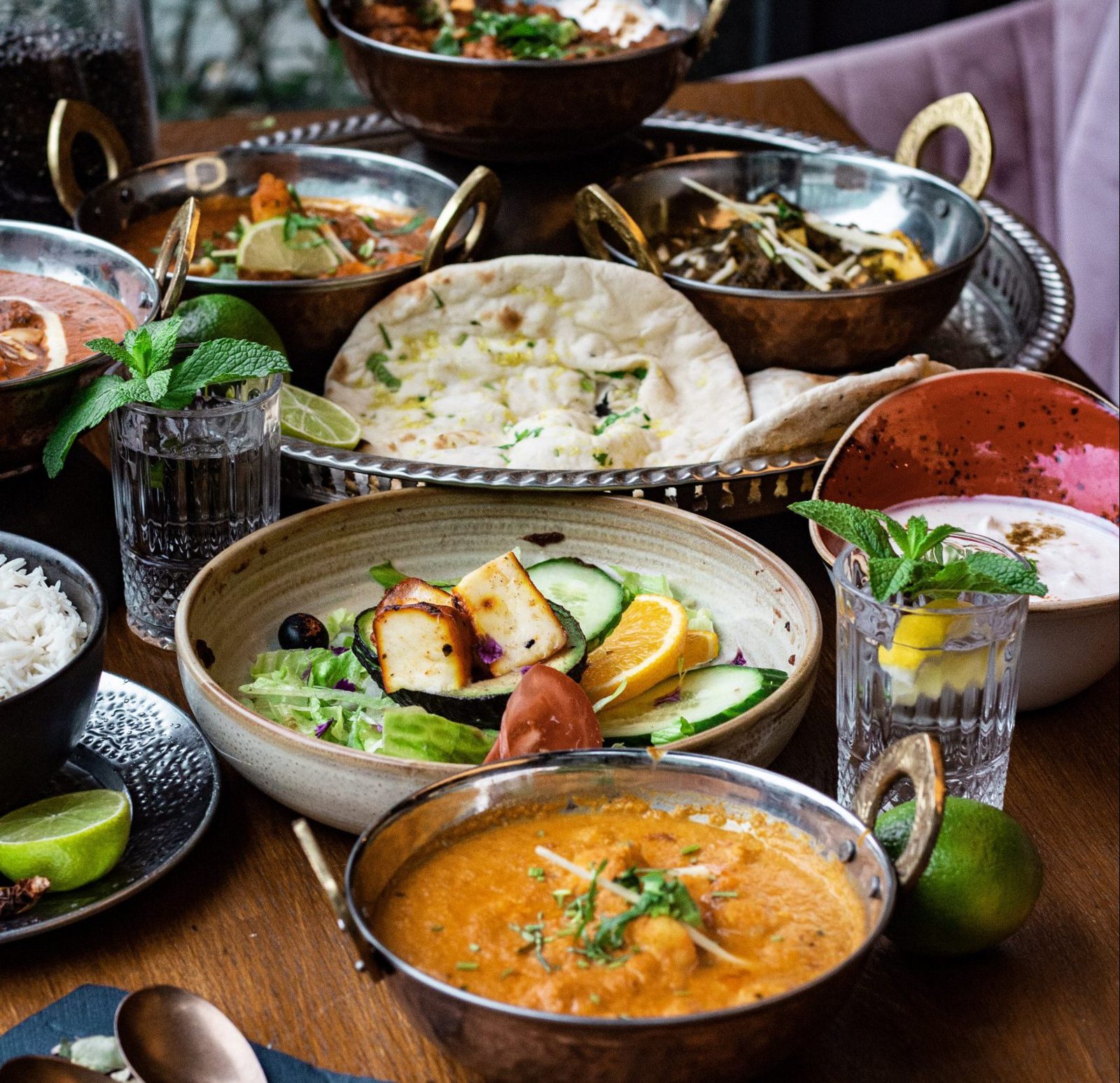
91Spices
Restaurants · Rotterdam
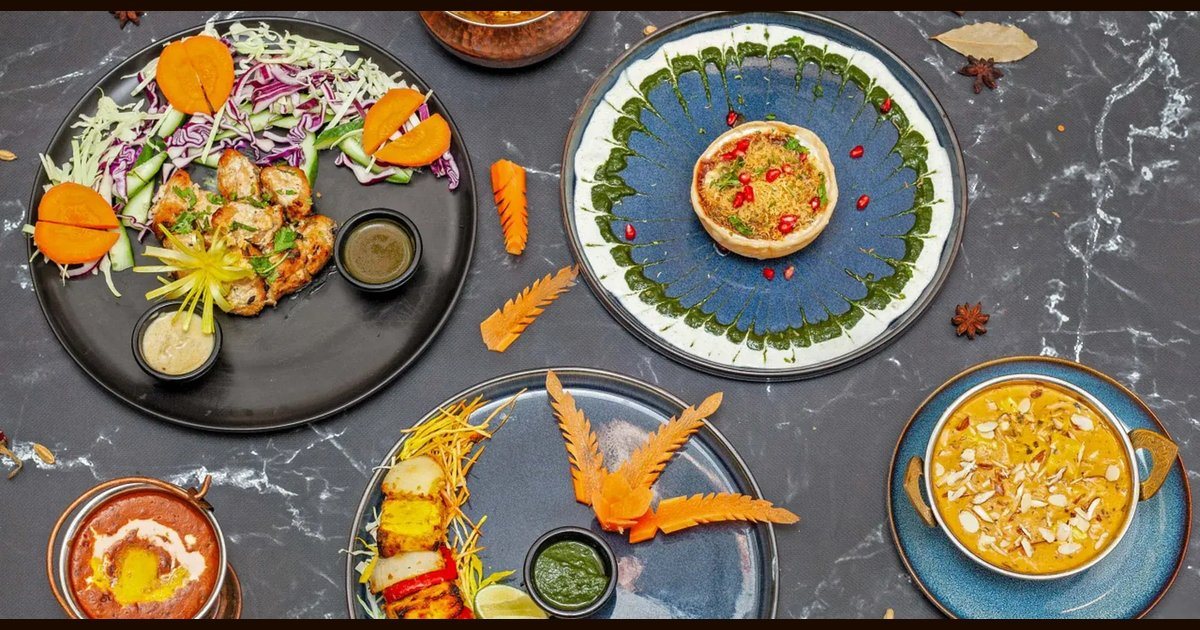
Anaya Foods
Restaurants · 's-Gravenhage
Anjappar
Restaurants · Amsterdam
Anjappar
Restaurants · 's-Gravenhage
15.Temples, gurdwaras and places of worship in the Netherlands
Correct or addContents ↑The Hindustani community built the Netherlands' temples — some fifty mandirs nationwide, the oldest in a Rotterdam basement for more than forty years — and the Indian expat community has added ISKCON centres and its own festivals. The Hindu Council of the Netherlands (Hindoe Raad) keeps the full list; the major ones:
| City | Temple | Where |
|---|---|---|
| Amsterdam | Radha Krishna Mandir (Sanatan Dharma) | Saaftingestraat 310, Osdorp (Nieuw-West) |
| Amsterdam | Lord Shiva Hindu Temple | Hoogoorddreef 79, Zuidoost |
| Amsterdam | ISKCON Amsterdam — Sunday feast 15:00–20:00 | Lizzy Ansinghstraat 80, De Pijp |
| The Hague | Shri Sanatan Dharm Dew Mandir | Gaslaan 74 |
| The Hague | Arya Samaj Nederland mandir | 1e van der Kunstraat 75, Laakkwartier |
| Rotterdam | Shri Ram Mandir | Putselaan 194, Zuid |
| Rotterdam | Shri Shiv Mandir — the oldest Hindu temple in the country | Nozemanstraat 3, West |
| Rotterdam | Shree Maheshvar Dhaam · Vaidik Mandir Arya Samaj · Sai Baba Mandir | Putsebocht 163A · Slaghekstraat 95 · Teilingerstraat 13 |
| Eindhoven | Mandir Triloki Dhaam · Shri Shiv Mandir | Tongelresestraat 371 · Vlokhovenseweg 41 |
| Eindhoven | ISKCON Eindhoven (Bhakti Center) — Ratha Yatra and the India Festival | Zeelsterstraat 186 |
| Utrecht | Shri Krishna Mandir · Shri Ganesh Mandir (Sundays from 13:00) · ISKCON Utrecht | Cartesiusweg 11 · Mereveldlaan 2, De Meern · Niastraat 21 |
| Wijchen | Shri Ram Mandir | Stationslaan 18 |
Gurdwaras
About nine nationwide: Shri Guru Nanak Gurdwara Sahib (Schakelstraat 21, Westpoort) and Gurdwara Maan Sarovar Sahib (Baarsjesweg 281, West) in Amsterdam; Sri Guru Singh Sabha in The Hague's Transvaal (Herman Costerstraat 140; an older address on Scheepersstraat also circulates); Gurdwara Shri Guru Nanak Dev in Rotterdam (Ottergracht 6); Gurdwara Eindhoven in Geldrop (Papenvoort 1, Sundays); Gurdwara Sikh Sangat Sahib in Almere (Brongouw 57); and one in Beverwijk. Utrecht has none.
Other faiths
The Surinamese-Hindustani Muslim community's Jamia Taibah mosque is in Amsterdam Zuidoost, and every city's Turkish and Moroccan mosques welcome South Asian Muslims for Eid. Indian Christians find English-language Catholic and Protestant congregations in every city, and Malayalam and Tamil Masses in the Randstad through the Syro-Malabar and Tamil chaplaincies. Pandits for house ceremonies come through the mandirs and the Hindoe Raad.
Every temple and gurdwara in the Netherlands, with addresses and hours →
16.Indian associations in the Netherlands, the festivals and the community year
Correct or addContents ↑The Netherlands has two festival calendars — the Hindustani one, kept in the temples and the Milan festival for fifty years, and the Indian expat one, organised by regional associations founded since 2010 — and they now meet on the same stages. The festival calendar on this site carries the dates and every event posted near you.
The associations
| Association | Who | What it does |
|---|---|---|
| Netherlands Telugu Community (NLTC, since 2017, Amstelveen) · Telugu Association Netherlands (TANE, since 2011, Eindhoven) | Telugus | Sankranti, Ugadi, cultural evenings |
| Eindhoven Marathi Mitramandal | Marathis | The Ganeshotsav at the Muziekgebouw with a dhol-tasha procession; garba |
| Kallol (since 2010) · Anandadhara · Hoichoi · Agomoni · Utsab · Bonghoven · USUC | Bengalis | Fourteen Durga Pujas across the country each October |
| Indian Center in Netherlands (ICIN) | Pan-Indian, Eindhoven | Diwali at the GLOW light festival; a directory of gurdwaras and services |
| The India Foundation (Utrecht) · Hamara Group (Eindhoven) · Bridging the Gap (Amstelveen) | Pan-Indian | Diwali celebrations; the Amstelveen Holi |
| Indian Students' Association Eindhoven (TU/e) and the ISAs at Delft, Amsterdam, Utrecht, Groningen | Students | Orientation, Diwali, Holi, cricket |
| Netherlands-India Association (The Hague) · the Gandhi Centre (ICCR) | Culture | Lectures, dance, Hindi classes |
| Hindoe Raad Nederland · the Hindustani organisations · APNA (Rotterdam) | The Hindustani community | The temples, the Divali processions, the Milan festival, Eindeloos India |
| KNCB and the clubs | Cricket | VRA and ACC in Amstelveen, Voorburg CC and HCC in The Hague, VOC, Excelsior '20 and Royal Punjab around Rotterdam, Eindhoven CC, Kampong in Utrecht |
The festival year
| Season | Festival | Where in the Netherlands |
|---|---|---|
| January | Pongal and Sankranti | The Telugu and Tamil associations |
| March | Holi | The Indian Colour Festival in Amstelveen's Emergohal (14 March 2026); Holi Hai in Amsterdam; the Hindustani Holi in The Hague and Utrecht |
| July | Ratha Yatra | ISKCON Amsterdam and ISKCON Eindhoven's India Festival |
| August | Milan Summer Festival | The Zuiderpark, The Hague, 21–23 August 2026 — the largest multicultural open-air festival in the country |
| September | Ganesh Chaturthi · Onam | The Ganeshotsav at the Muziekgebouw Eindhoven with a procession to the 18 Septemberplein (19 September 2026); the Malayalee associations' Onam in Eindhoven, Amsterdam and The Hague |
| October | Navratri, Garba and Durga Puja | Garba in Amstelveen and Eindhoven; fourteen Durga Pujas, 16–21 October 2026, in Amstelveen, Hoofddorp, Almere, The Hague, Veldhoven, Capelle, Utrecht and Nieuwegein |
| October–November | Diwali | The Diwali Festival Amstelveen on the Stadsplein (17th edition 18 October 2025, free); Divali Den Haag's torch procession to the Hobbemaplein; the APNA Divali Familie Festival at de Doelen, Rotterdam (25 October 2026); Hamara Diwali and ICIN's Diwali at GLOW in Eindhoven; The India Foundation's Diwali in Utrecht; Diwali itself on 8 November 2026 |
| November | Guru Nanak Jayanti | Every gurdwara |
Kinepolis and Pathé screen Hindi, Tamil and Telugu releases in the big cities; Bollywood dance schools and Bharatanatyam teachers advertise through the associations.
Coming up in the Netherlands
Every event →- OCT17–20
ওম বাংলা দুর্গোৎসব ২০২৬
17–20 Oct 2026
Oranje-Nassaustraat 31
🎭 Cultural - OCT17
Anandadhara Durga Puja 2026
Sat, 17 Oct 2026, 10:00
VRA Cricket Ground
🙏 Religious - OCT17
Stille Kracht, Levende Tradities – Maand van de Geschiedenis 2026
Sat, 17 Oct 2026, 12:00–16:30
Nieuwe Veste
🎭 Cultural - OCT17
Bhajan Jamming
Sat, 17 Oct 2026, 15:00–17:00
Wijkcentrum De Boerderij- Maatvast Haarlemmermeer
🙏 ReligiousFree - OCT17
Dandiya garba
Sat, 17 Oct 2026, 16:30–21:30
Vlaskamp 3
🎭 Cultural
- OCT17
RotiCruise Rotterdam
Sat, 17 Oct 2026, 17:00–20:00
Parkhaven 17
🍛 Food & Drink€27.00


17.WhatsApp groups, and why to start your Dutch journey on Namaste Community
Correct or addContents ↑Every Indian who has moved abroad has the same first move: find the WhatsApp group. The Netherlands has thousands — "Indians in Amstelveen", the ASML groups, the Telugu and Tamil and Malayali ones, the Eindhoven parents' groups, the Amsterdam housing groups that fill with scams, the cricket groups, the Durga Puja committees — and they are how the community has always run. This guide is not going to pretend otherwise.
What the groups are good at, and what they are not
They are fast and warm: ask at nine in the evening which GP in Meerhoven is still taking patients and somebody who registered last month will answer before ten. But you need to know somebody to get the link; the links that circulate are stale, and the live ones are where the "guaranteed job" and "flat, pay the deposit first" scams start — Dutch housing fraud against newcomers is an industry. A group of 1,000 people has no moderator, so the same three questions are asked every week and the answers scroll away. Every member can see your phone number. And a group does not know where you live: the flat in Almere and the garba in Eindhoven arrive with the same weight as the one in Amstelveen.
What Namaste Community does instead
Namaste Community is a free app, built in the Benelux by members of this community, that keeps what the groups do well and fixes the rest. It launched in Belgium, the Netherlands and Luxembourg and works in every country — so it is also the answer when the job moves you to Dublin or Munich.
- Everything is ranked by distance from you — events, groups, questions, businesses and things for sale, within 10, 50, 100 or 200 km, your choice — so an Amstelveen member sees Amstelveen first and Eindhoven's Ganeshotsav further down.
- Groups with a place and a moderator, joined by people within their radius, with polls, join modes and a member limit; your phone number is never shown, and you can post under your name or an anonymous handle.
- Ask, and the answer stays: the question about the 30% ruling, the licence exchange or a GP taking patients is answered once, in a thread the next person finds.
- A directory with reviews of grocers, restaurants, tailors, tutors, accountants and driving schools, listed free by the businesses themselves.
- The events calendar — every Diwali festival, garba, Durga Puja, Ganesh procession and cricket match near you, imported daily and moderated, with an RSVP; the same calendar behind the festival pages.
- Marketplace and rooms from members near you — furniture, a bike, a room in Leidsche Rijn.
- Verified members, moderation, and a report button on everything.
Your first week in the app
- Install it, sign in, set your location and a 10 km radius. Get the app for iPhone or Android.
- Join the general group for your city and the one for your language or interest. Read before you post.
- RSVP to one event in the next fortnight — a temple programme, a garba, a cricket practice.
- Ask the question you actually have, and say which municipality you are in; the expat centre, the parking rules and the school lists differ.
- When you have found your flat, your GP and your grocer, leave a review or an answer for the next person from Hyderabad or Pune.
The groups across the Netherlands are listed below, ranked by how active they are. If the one you need does not exist, start it: it takes a minute, and it shows up here for the next person searching.
Local groups in the Netherlands
All groups →18.Hindustani, Nepali, Sri Lankan, Pakistani and Bangladeshi neighbours
Correct or addContents ↑The Netherlands' South Asian population is the largest and most layered in the Benelux, and an Indian newcomer shares the country with four communities that predate them.
- The Surinamese-Hindustani community — 163,000 to 185,000 people, the descendants of the indentured labourers who left Bihar and Uttar Pradesh for Suriname between 1873 and 1916 and came to the Netherlands in the 1970s. Two-thirds live in The Hague and Rotterdam and a third in and around Amsterdam; they speak Sarnami Hindustani and Dutch, keep Sanatan Dharma and Arya Samaj Hinduism and Islam, built the country's temples and the Paul Krugerlaan, and run the Milan festival, the Divali processions and APNA in Rotterdam. Their roti, their bara and their phulauri are the cheapest Indian meal in the Netherlands. The 150th anniversary of Hindustani immigration was marked in 2023.
- Pakistanis — about 27,000 (2022), concentrated in Amsterdam, Rotterdam and The Hague, with the Pakistan embassy in The Hague, Pakistani mosques and the Royal Punjab cricket club near Rotterdam.
- Sri Lankan Tamils — about 15,000, settled in the smaller towns (Zeist, Nieuwegein, Den Bosch, Breda, Roermond, Den Helder) after the 1980s, with their own temples and the Tamil chaplaincies; the Sri Lankan embassy is in The Hague. Sri Lankans are, uniquely among South Asians, exempt from the TB test.
- Bangladeshis — about 3,500, with the Bangladesh embassy in The Hague and Pohela Boishakh celebrations; the Bengali Durga Puja associations welcome Bangladeshi Bengalis.
- Nepalis — about 2,700 nationals, many in the restaurant trade; Nepal has no embassy in the Netherlands and is covered from Brussels.
Everything on this page about permits, the BSN, health insurance, tax, housing and transport applies identically to all of them; the differences are the embassy, the festival calendar, the TB rule and — for the Hindustani community — a century of roots that an expat newcomer can only be grateful for.
19.OCI card and Indian passport renewal in the Netherlands: the Embassy of India in The Hague
Correct or addContents ↑The Embassy of India is at Oranjestraat 12, 2514 JB The Hague. Passports are applied for on Passport Seva and submitted at the embassy itself by appointment — with a prepaid DHL airway bill for the return; allow four to six weeks, and there is no Tatkal at The Hague. OCI applications are submitted at the embassy too: VFS Global, which ran the centres at Parkstraat 99 in The Hague and on Radarweg in Amsterdam, stopped taking Indian consular applications on 1 June 2025, and the embassy now books every passport, OCI and surrender appointment itself — at Oranjestraat 12 or the older building at Buitenrustweg 2, whichever the appointment letter names. The step-by-step guides are OCI card from the Netherlands and Indian passport renewal in the Netherlands. There is no consulate-general in Amsterdam. Contact: consular.thehague@mea.gov.in for passports and renunciation, attcons.thehague@mea.gov.in for OCI, visas and miscellaneous services; the website lists the after-hours emergency number for genuine emergencies.
The embassy's Gandhi Centre (the ICCR cultural centre) runs Hindi classes, yoga and dance in The Hague, and the embassy hosts the community's Independence and Republic Day gatherings. The Indian Community Welfare Fund helps nationals in distress; students are asked to register on the MADAD grievance portal and on the embassy's community list, which is how emergency notices and the annual events reach you.
Questions people ask
- How many Indians live in the Netherlands?
- 99,014 people of Indian background on 1 January 2026 (CBS), up from about 27,000 in 2014 — mostly knowledge migrants and their families — plus a Surinamese-Hindustani community of roughly 163,000–185,000. India’s Ministry of External Affairs counts about 234,000 overseas Indians as of January 2026, a figure that includes the Hindustani community. Amsterdam (10,895), Eindhoven (9,507), Almere (9,147), The Hague (6,407), Amstelveen (5,955) and Utrecht (5,098) have the most.
- What is the highly skilled migrant salary threshold in the Netherlands in 2026?
- €5,942 gross a month for those aged 30 and over, €4,357 under 30, and €3,122 for graduates of a Dutch or top-200 university after the orientation year, all excluding the 8% holiday allowance; the EU Blue Card is €5,942 (€4,754 for recent graduates). Only an IND-recognised sponsor can apply, the IND aims to decide within two weeks, and the fee is €423.
- How does the 30% ruling work in 2026?
- Employees recruited from more than 150 km outside the Netherlands earning at least €48,013 (€36,497 for under-30s with a master’s) can receive 30% of salary tax-free for five years — 30% in 2026, 27% from 2027 for those who started in 2024 or later — capped at €78,600 on a €262,000 base. The employer applies within four months of the start date. The ruling also lets you exchange any foreign driving licence, including an Indian one.
- What do I do in my first week in the Netherlands?
- Register at the municipality (or your city’s expat centre) within five days to get your BSN, collect your residence card, take out health insurance (compulsory within four months, backdated to arrival), open a bank account and DigiD, register with a GP, book the tuberculosis test at the GGD within three months, and make sure your employer files the 30% ruling. Apostilled birth and marriage certificates are needed for the family’s registration.
- Can I drive in the Netherlands with an Indian driving licence?
- For 185 days after registering; then no. India is not on the list of countries whose licences can be exchanged, so you take the CBR theory and practical tests — unless you hold a valid 30%-ruling decision, in which case you (and your family on your permit) can exchange a licence from any country at the municipality.
- How much is rent in the Netherlands in 2026?
- A new free-sector tenant paid €1,882 a month on average — €20.94 per square metre — in the second quarter of 2026; Amsterdam is €28.69/m², Amstelveen €25.10, Rotterdam €22.79, The Hague €22.42, Utrecht €21.61 and Eindhoven €20.25. Regulated middle rent is capped at €1,228.07 for 2026 contracts, the deposit at two months, and tenants cannot be charged agency fees; a landlord who forbids BRP registration is breaking the law.
- Do I have to do civic integration (inburgering) as a knowledge migrant?
- No. The 2021 Civic Integration Act excludes people whose residence purpose is temporary — knowledge migrants, Blue Card holders, researchers, students — and their family members; partners of knowledge migrants are also exempt from the civic-integration exam abroad. It applies to those who settle through family reunification with a Dutch or permanent resident, and to refugees. A2 Dutch is still needed for permanent residence and naturalisation.
- Is health insurance compulsory, and what does it cost?
- Yes, within four months of arrival, backdated to the day you arrived; the average basic premium is €159.30 a month in 2026 with a €385 annual deductible, children under 18 free, and a zorgtoeslag allowance for lower incomes. Register with a GP as soon as you have an address — six in ten practices had a patient stop in 2024 and the GP is the gatekeeper to everything else.
- Where are the Hindu temples and gurdwaras in the Netherlands?
- Some fifty mandirs, mostly built by the Hindustani community: in Amsterdam the Radha Krishna Mandir in Osdorp, the Shiva temple in Zuidoost and ISKCON in De Pijp; in The Hague the Shri Sanatan Dharm Dew Mandir on Gaslaan; in Rotterdam the Shri Ram Mandir on Putselaan and the Shri Shiv Mandir, the oldest in the country; in Eindhoven Triloki Dhaam, Shri Shiv Mandir and ISKCON; in Utrecht the Shri Krishna Mandir. Gurdwaras are in Amsterdam, The Hague, Rotterdam, Geldrop (for Eindhoven), Almere and Beverwijk.
- When and where is Diwali celebrated in the Netherlands?
- Diwali falls on 8 November 2026. The Diwali Festival Amstelveen on the Stadsplein (18 October 2025 for its 17th edition, free), Divali Den Haag’s torch procession to the Hobbemaplein, the APNA Divali Familie Festival at de Doelen in Rotterdam (25 October 2026), Hamara Diwali and ICIN’s Diwali at GLOW in Eindhoven and The India Foundation’s Diwali in Utrecht are the big public ones; every temple holds Lakshmi puja.
- Can I become Dutch and keep my Indian passport?
- Dutch naturalisation is possible after five years of lawful residence (three with a Dutch partner) with the civic-integration exam at A2 (a rise to B1 has been proposed but not enacted as of this guide’s check) and, in principle, renunciation of your other nationality. India does not allow dual citizenship, so naturalising means surrendering the Indian passport and applying for an OCI card. The fee is €1,139 (€1,454 with a partner).
- Is this guide also for Nepali, Sri Lankan, Pakistani and Bangladeshi people?
- Yes. The permit, the BSN, health insurance, tax, housing and transport rules apply identically to every non-EU newcomer. The section on South Asian neighbours covers the Surinamese-Hindustani community that built the country’s temples, the Pakistani, Sri Lankan Tamil, Bangladeshi and Nepali communities, their embassies in The Hague (Nepal is covered from Brussels), and the one rule that differs: Sri Lankans are exempt from the TB test and Indians, Nepalis, Pakistanis and Bangladeshis are not.
Sources
The official pages this guide was checked against on September 27, 2026. When they and this page disagree, they win.
- CBS — provisional population per municipality, 1 January 2026www.cbs.nl/nl-nl/maatwerk/2026/11/voorlopige-bevolkingsaantallen-per-gemeente-1-1-2026
- CBS — population grows more slowly for the third year (2026)www.cbs.nl/nl-nl/nieuws/2026/06/bevolking-groeit-voor-derde-jaar-op-rij-minder-snel
- CBS — immigrants from India stay longer in the Netherlands (2025)www.cbs.nl/nl-nl/nieuws/2025/10/immigranten-uit-india-blijven-langer-in-nederland-wonen
- AlleCijfers — residents of Indian background per municipality (2026)allecijfers.nl/migratie/india/
- Ministry of External Affairs — population of overseas Indians (January 2026)www.mea.gov.in/population-of-overseas-indians
- Hindorama — the Hindustani community in the Netherlands in 2023 (Chan Choenni)www.hindorama.com/de-hindostaanse-gemeenschap-in-nederland-anno-2023-een-beschouwing-dr-chan-choenni/
- IND — annual figures 2025 (PDF)ind.nl/nl/documenten/02-2026/ind-jaarcijfers-2025.pdf
- IND — fees and required amounts for 2026ind.nl/en/news/fees-and-required-amounts-for-2026-known
- IND — residence permit for a highly skilled migrantind.nl/en/residence-permits/work/highly-skilled-migrant
- IND — public register of recognised sponsorsind.nl/en/public-register-recognised-sponsors
- IND — feesind.nl/en/fees-costs-of-an-application
- IND — orientation year for highly educated persons (PDF)ind.nl/en/forms/9571.pdf
- IND — civic integration exam abroadind.nl/en/civic-integration-exam-abroad
- IND — permanent residence permitind.nl/en/replace-extend-renew-and-change/permanent-residency/permanent-residence-permit
- IND — Dutch citizenship through naturalisationind.nl/en/dutch-citizenship/becoming-a-dutch-national-through-naturalisation
- IND — TB test exemption list (PDF)ind.nl/en/forms/7644.pdf
- Civic Integration Act 2021 (wetten.overheid.nl)wetten.overheid.nl/BWBR0044770/
- Rijksoverheid — the new Civic Integration Actwww.rijksoverheid.nl/themas/migratie-en-reizen/inburgeren-in-nederland/nieuwe-wet-inburgering
- Rijksoverheid — when to register in the BRPwww.rijksoverheid.nl/vraag-en-antwoord/privacy-en-persoonsgegevens/wanneer-in-brp-inschrijven
- Government.nl — when do I need health insurancewww.government.nl/faq/health-insurance/when-do-i-need-to-take-out-health-insurance-if-i-come-to-live-in-the-netherlands
- Zorgwijzer — health insurance premiums 2026www.zorgwijzer.nl/zorgverzekering-2026/zorgverzekering-2026-alle-premies-bekend-overzicht
- Court of Audit — one in twenty Dutch residents looking for a GP (2025)www.rekenkamer.nl/actueel/nieuws/2025/04/02/1-op-20-nederlanders-zoekt-andere-huisarts
- Belastingdienst — Box 1 rateswww.belastingdienst.nl/wps/wcm/connect/bldcontentnl/belastingdienst/prive/inkomstenbelasting/heffingskortingen_boxen_tarieven/boxen_en_tarieven/box_1/box_1
- Rijksoverheid — minimum wage 2026www.rijksoverheid.nl/themas/werk/minimumloon/bedragen-minimumloon/bedragen-minimumloon-2026
- Ministry of External Affairs — social security agreementswww.mea.gov.in/social-security-agreements
- Pararius — sell-off of rental homes spreads (Q2 2026)www.pararius.com/news/sell-off-of-rental-homes-in-the-netherlands-spread
- Rijksoverheid — indexation of rent limits and allowances 2026www.rijksoverheid.nl/actueel/nieuws/2025/11/25/indexering-inkomensgrenzen-woningcorporaties-maximale-huurprijsgrenzen-en-huurtoeslagparameters-2026
- Rijksoverheid — the Permanent Tenancy Contracts Act (2024)www.rijksoverheid.nl/actueel/nieuws/2024/06/07/wet-vaste-huurcontracten-vanaf-1-juli-2024-van-kracht
- Rijksoverheid — childcare allowance amounts 2026www.rijksoverheid.nl/themas/belastingen-uitkeringen-en-toeslagen/kinderopvangtoeslag/bedragen-kinderopvangtoeslag-2026
- ERA — starters’ transfer-tax exemption 2026www.era.nl/grens-startersvrijstelling-overdrachtsbelasting-stijgt-in-2026-naar-555-000
- Netherlands Labour Authority — foreign studentswww.nllabourauthority.nl/topics/foreign-nationals-employment-act/foreign-students
- TU/e — tuition feeswww.tue.nl/en/education/become-a-tue-student/tuition-fees-and-other-study-costs/tuition-fee
- Study in NL — the NL Scholarshipwww.studyinnl.org/finances/holland-scholarship
- NL Times — number of international students falls for the first time in 20 years (2026)nltimes.nl/2026/06/11/number-international-students-dutch-universities-falls-first-time-20-years
- OV-chipkaart — travelling with the OV-chipkaart and OVpaywww.ov-chipkaart.nl/reizen-met-de-ov-chipkaart
- KLM — flights from the Netherlands to Indiawww.klm.nl/en-nl/flights-from-netherlands-to-india
- Embassy of India, The Hague — consular services delivered directly (notice)www.indianembassynetherlands.gov.in/section/news/notice-for-website-from-consular-wing/
- Embassy of India, The Hague — contactwww.indianembassynetherlands.gov.in/page/contact-us/
- ICCR — Gandhi Centre, The Hagueiccr.gov.in/indianculturalcenter/gandhi-centre-hague-netherlands
- Hindoe Raad Nederland — mandirshindoeraad.org/hindoe-gemeenschap/mandirs/
- Hindorama — overview of Hindu temples in the Netherlandswww.hindorama.com/overzicht-van-hindoe-tempels-in-nederland/
- Radha Krishna Mandir Amsterdamwww.radhakrishnamandir.nl/contact
- Lord Shiva Hindu Temple, Amsterdamshivatemple.nl/
- ISKCON Amsterdamcentres.iskcon.org/centre/iskcon-amsterdam/
- Shri Shiv Mandir Rotterdamsrishivmandirrotterdam.nl/
- ISKCON Eindhoveniskconeindhoven.nl/
- SikhiWiki — gurdwaras in the Netherlandswww.sikhiwiki.org/index.php/Gurudwaras_in_Netherlands
- Gurdwara Eindhoven (Geldrop)icinnl.nl/indian-guide/gurdwara-list/
- Kallol — Durga Pujakallol.nl/durga-puja/
- Guide to all Durga Puja celebrations in the Netherlands 2026shirshendusengupta.com/blog/complete-guide-to-all-durga-puja-celebrations-in-netherlands-by-bengali-communities-locations-dates-opening-hours-latest-updates
- Netherlands Telugu Communitywww.nltc.nl/
- Telugu Association Netherlands (Eindhoven)manatane.org/
- Eindhoven Marathi Mitramandal — Ganeshotsavmge.nl/agenda/ganeshotsav/
- Diwali Festival Amstelveen 2025www.mijnamstelveen.nl/diwali-festival-amstelveen-2025-festival-of-lights-on-18-october/
- Indian Colour Festival (Holi) Amstelveen 2026www.mijnamstelveen.nl/indian-colour-festival-holi-2026-in-emergohal-amstelveen/
- Milan Summer Festival 2026www.milansummerfestival.nl/veelgestelde-vragen/
- Divali Den Haagwww.divalidenhaag.nl/
- APNA Divali Familie Festival 2026, Rotterdamwww.uitagendarotterdam.nl/en/agenda/apna-divali-familie-festival-2026-het-festival-van-licht/
- GLOW Eindhoven — Diwali by the Indian Center in Netherlandsgloweindhoven.nl/en/project/diwali-indian-center-netherlands/
- KNCB — clubskncb.nl/en/clubs
- Wikipedia — South Asians in the Netherlandsen.wikipedia.org/wiki/South_Asians_in_the_Netherlands
- Wikipedia — list of diplomatic missions in the Netherlandsen.wikipedia.org/wiki/List_of_diplomatic_missions_in_the_Netherlands
- Numbeo — cost of living in Amsterdam (September 2026)www.numbeo.com/cost-of-living/in/Amsterdam
- Numbeo — cost of living in Eindhoven (September 2026)www.numbeo.com/cost-of-living/in/Eindhoven
Your case is different? Ask people who’ve been through it
Members near you have dealt with this themselves. Ask under your name or anonymously — answers come by email.
Ask the community — freeEverything in the Netherlands that this page cannot keep current — events this week, groups near you, businesses with reviews — is in the app, ranked by distance.
Namaste Community — the Indian expat community, near you. Free to join, works in every country.
More guides
Indians in Amsterdam: the 2026 guide to the neighbourhoods, IN Amsterdam, the temples and the community
Checked September 27, 2026
Indians in Amstelveen: the 2026 guide to the Netherlands’ Little India
Checked September 27, 2026
Indians in The Hague: the 2026 guide to the Hindustani city, the embassy, Shell and the international institutions
Checked September 27, 2026
Indians in Eindhoven: the 2026 guide to the ASML city, Meerhoven, the temples and the Ganeshotsav
Checked September 27, 2026
Indians in Rotterdam: the 2026 guide to the port city, the oldest temple in the Netherlands and the community
Checked September 27, 2026
Indians in Utrecht: the 2026 guide to the city in the middle, Leidsche Rijn, the temples and the community
Checked September 27, 2026
Jobs in the Netherlands for Indians (2026): the kennismigrant permit, the 30% ruling, where to look, salaries and the honest odds
Checked October 10, 2026
OCI card from the Netherlands (2026): naturalisation, surrender, the Embassy in The Hague, documents, fees and the e-OCI
Checked October 10, 2026
Indian passport renewal in the Netherlands (2026): the embassy’s own counters, the new fees, documents, children and lost passports
Checked October 10, 2026