Social life
Traditional Belgian Cuisines
Asha MenonCommunity desk · Brussels
Guide · Belgium
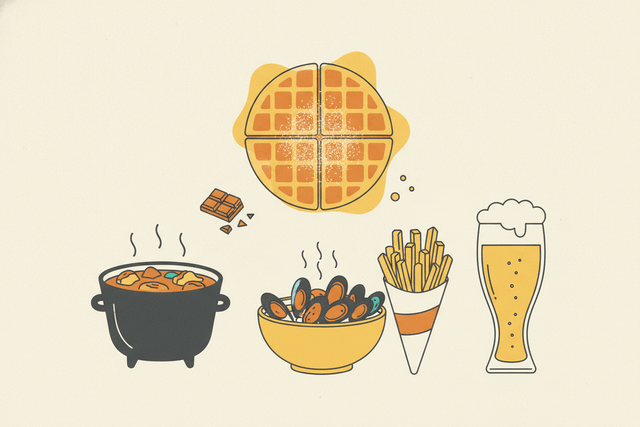
Take Belgian chocolate — bars and dry-filled pralines rather than fresh-cream ones — with speculoos, Destrooper biscuits, up to two litres of Trappist beer or spirits, and whatever a specific person has asked for; leave electronics, clothes and medicines behind, because in 2026 they cost the same or less in India. On arrival an Indian resident or OCI holder arriving by air may bring ₹75,000 of new goods duty-free under the Baggage Rules 2026 (in force since 2 February 2026), plus one new laptop, and pays 38.5% on the excess. Anything heavier than a suitcase goes by bpost or a cargo agent, and the recipient pays Indian duty of roughly 31–44%, because a “gift” label has not avoided duty since 2019.
Every Indian household in Belgium has had the same conversation the week before a flight home: what goes in the bag? The honest answer in October 2026 is shorter than the shopping lists suggest. Take food and drink that India does not make — Belgian chocolate, speculoos, butter biscuits, a few bottles of beer — and whatever a particular person has actually asked for. Leave almost everything else, because the gap in prices that justified a suitcase of electronics in 2005 has closed, and in several categories reversed.
What goes in the bag of someone who has done this trip a dozen times:
What is a waste of luggage in 2026:
Two numbers frame everything below. India’s Baggage Rules 2026, in force since 2 February 2026, let a resident or an OCI holder arriving by air bring ₹75,000 of new goods duty-free — about €700 — plus one new laptop; the 2016 rules and their ₹50,000 figure, still quoted on most blogs, are gone. And the euro bought ₹106.86 on 16 October 2026 (ECB reference rate), which is the rate used for every conversion on this page. For everything about living here rather than leaving, the Belgium country guide is the place to start.
First-hand: Social life in Belgium
Written by people who have just done it, under their own name.
Chocolate is the Belgian gift, and most of it arrives in India as a soft brown brick because the buyer chose by brand rather than by physics. Cocoa butter softens from about 30 °C and is fully liquid in the mid-thirties — which is a Delhi afternoon in April, a Chennai afternoon most of the year, and the inside of a taxi boot anywhere. Plan the chocolate around that, not around the shop.
Checked bag, in the centre, wrapped in clothes on all sides; an insulated bag with a frozen gel pack buys several hours more. There is no non-stop Belgium–India flight, so your bag spends an hour or two on the ground in Doha, Dubai or Abu Dhabi — in summer that tarmac is 45 °C. Land, go home, fridge. From November to February chocolate travels easily to most of India; from April to June carry only bars and biscuits, or none.
Prices below are October 2026 shelf and recommended prices in euros, converted at ₹107 to the euro.
| What | What it costs here | In rupees | Heat tolerance |
|---|---|---|---|
| Côte d’Or 200 g bar, supermarket | about €4 | about ₹430 | Good |
| Jacques bar, supermarket | a little less than Côte d’Or | — | Good |
| Lotus Biscoff 250 g | €1.40–2.00 | ₹150–215 | Excellent |
| Jules Destrooper box | a few euros | — | Excellent |
| Leonidas 500 g ballotin | €29.15 recommended price, 2026 | about ₹3,100 | Fair — no cream fillings |
| Neuhaus 350 g ballotin | €39.99 (airport shop, October 2026) | about ₹4,300 | Fair — no ganaches |
| Godiva 350 g Gold ballotin | the same band as Neuhaus | — | Fair |
The comparison that matters is with Indian shelves. Côte d’Or’s Indian launch price of ₹499 for 100 g in July 2026 is more than double the Belgian supermarket price for the same weight; Neuhaus at Mumbai airport is priced as airport luxury. So the supermarket bar is still an excellent gift at a fifth of what a Neuhaus box costs, and the chocolatier box is for the people who would notice. Buy Côte d’Or and Jacques at Colruyt, Delhaize or Carrefour prices rather than at a station kiosk; buy pralines from the chocolatier’s own shop the day before you fly, say they are travelling, and ask for no fresh cream.
First-hand: Daily how-tos in Belgium
Written by people who have just done it, under their own name.
Asha MenonCommunity desk · Brussels
Asha MenonCommunity desk · Brussels
Asha MenonCommunity desk · Brussels
A gift from Belgium is a gift from Europe in the eyes of the person opening it, so the test is not Belgian-ness but whether it is good, keeps, and says something about them. Bands are October 2026 prices at ₹107 to the euro; everything here fits the ₹75,000 allowance many times over.
| For | What works | Band |
|---|---|---|
| Parents | A chocolatier box without cream fillings (Leonidas 500 g, or Neuhaus 350 g for a special year), a Destrooper gift tin, a good hard abbey cheese if they eat it, the hand cream or shaving soap they ran out of last visit | €15–45 · ₹1,600–4,800 |
| In-laws | The Neuhaus or Godiva box, because it is the one they will put on the table when guests come; a bottle within the two-litre allowance for a father-in-law who drinks | €30–60 · ₹3,200–6,400 |
| Children | Côte d’Or filled bars and Biscoff, Tintin and Smurf albums in English (both are Belgian), a Belgian football shirt, stickers and stationery that are cheap here and expensive in Indian malls | €5–30 · ₹535–3,200 |
| Friends | A 200 g bar each (about ₹430), a Trappist bottle for the beer drinker, a jar of Biscoff spread in the checked bag | €2–8 each · ₹215–855 |
| Colleagues and the office | A multipack of Côte d’Or mini bars or Biscoff XL packs to put on the table, plus one Destrooper box for the boss | €10–25 for the lot · ₹1,070–2,700 |
| The house help, the driver, the watchman | Chocolate bars and a Belgian-made toiletry each — small, individual, and not the leftovers | €2–5 each · ₹215–535 |
For a Diwali trip the Diwali in Belgium page lists what the shops and associations here are doing; Belgian chocolate boxes in Diwali colours sell out in the last week of October, so buy early.
First-hand: Family & kids in Belgium
Written by people who have just done it, under their own name.

Ananda Rajashekar · Brussels

Asha MenonCommunity desk · Brussels

Asha MenonCommunity desk · Brussels
Annexure I of the Baggage Rules 2026 excludes from the duty-free allowance “alcoholic liquor or wines in excess of two litres” and “cigarettes exceeding 100 sticks or cigars exceeding 25 or tobacco exceeding 125 g”. Two litres is the whole alcohol allowance — beer, wine, jenever and whisky together — per adult passenger, and the allowance of one passenger may not be pooled with another’s. Above two litres the duty is punitive: the tables published after the 2026 rules put the combined duty and cess on excess alcohol at more than the value of the bottle. Do not bother; carry two litres and buy the rest in India.
What two litres means in practice: six 33 cl bottles, or two 75 cl bottles, or one 75 cl bottle and three 33 cl ones. Bottle-conditioned Trappist and abbey beers — Westmalle, Chimay, Rochefort, Orval — keep for months without a fridge and are the beers an Indian friend has read about; Duvel travels well too. Cans are lighter than bottles and do not break; glass goes in the checked bag, each bottle in a sock, in the middle of the case. Liquids over 100 ml are never allowed in the cabin, including a sealed bottle, unless it was bought airside and is still in its sealed security bag with the receipt (the transfer section covers this).
Four states — Gujarat, Bihar, Mizoram and Nagaland — prohibit alcohol. Flying into Ahmedabad or Patna with six Trappists is a bad idea; the rest of India varies by state excise but has no problem with a traveller’s two litres.
A fresh Liège waffle does not survive the journey and a Brussels waffle is a batter, not a thing you carry. Packaged Lotus waffles and Jules Destrooper butter waffles do travel; so does every speculoos biscuit ever baked. Biscoff spread counts as a liquid or paste at security — the jar goes in the checked bag, and glass jars go in the middle.
A hard or semi-hard Belgian abbey cheese keeps for a week unrefrigerated in a cool bag and is a real treat for the cheese-eaters in the family. Be aware of the Indian side: the electronic Customs Baggage Declaration (CBD-I) that every arriving passenger with dutiable or prohibited goods must file asks explicitly whether you are bringing “meat and meat products / dairy products / fish / poultry products”, and a “yes” means the red channel. Strictly, animal products need a sanitary import permit from India’s Department of Animal Husbandry and Dairying; a vacuum-packed cheese for the family is not what that rule exists for, but it is a declaration item, so declare it rather than walk through green with it. Nothing with meat — Ardennes ham, salami, pâté — is worth the conversation.
Olive oil, Italian coffee, Dutch cheese, Swiss chocolate: all available at Belgian supermarkets, all heavy, none cheaper than in an Indian gourmet store by enough to matter. Belgian jenever (a spirit, so within the two litres), Belgian pear syrup (sirop de Liège, a paste — hold luggage) and Belgian cuberdons (which melt) are the genuinely local extras. The Indian grocers in the Belgium directory are the people to ask about Indian-made products that are oddly better here, which is its own small category.
First-hand: Daily how-tos in Belgium
Written by people who have just done it, under their own name.
Asha MenonCommunity desk · Brussels
Asha MenonCommunity desk · Brussels
Asha MenonCommunity desk · Brussels
The 1990s suitcase was full of things that were cheaper abroad: cameras, phones, trainers, cosmetics, whisky. In October 2026, with the euro at about ₹107, the list is much shorter, and this is the section to read before spending anything.
A €4 bar that would be ₹1,000 in India saves ₹570; six of them save ₹3,400 and weigh 1.2 kg. A €1,200 laptop that is ₹1,05,000 in India saves nothing after you have paid for it in euros. Spend the weight allowance on the first kind of thing. The Belgium country guide’s money section covers the other half of this — sending money rather than things.
First-hand: Money & banking in Belgium
Written by people who have just done it, under their own name.
India rewrote its passenger rules at the start of 2026. The Baggage Rules, 2026 (Notification 14/2026-Customs (N.T.)) came into force on 2 February 2026 and superseded the 2016 rules, and the Customs Baggage (Declaration and Processing) Regulations, 2026 made the declaration electronic the same day. Most of what Google still shows — ₹50,000, paper forms — is the old regime. The figures below are from the notifications and from CBIC’s International Travel Guide of February 2026.
| Who | Arriving by air or sea | Arriving by land |
|---|---|---|
| Indian resident · tourist of Indian origin (NRI, OCI, PIO) · foreigner on a visa other than a tourist visa | ₹75,000 of new articles, plus used personal effects | Used personal effects only |
| Tourist of foreign origin | ₹25,000 | Used personal effects only |
| Infant (under two) | Used personal effects only | — |
Three details in the text matter. Allowances are not pooled: a family of three cannot combine ₹2,25,000 for one item. One new laptop or notepad is duty-free for every passenger aged 18 or over, on top of the allowance. And the allowance is for accompanied baggage: a box shipped separately counts as baggage only if dispatched within a month of your arrival, and gets no ₹75,000.
Never inside the allowance (Annexure I): firearms; more than 50 cartridges; more than 100 cigarettes, 25 cigars or 125 g tobacco; more than two litres of alcohol; gold or silver other than ornaments; televisions.
Baggage duty is set by Notification 26/2016-Customs, which the 1 February 2026 amendment (04/2026-Customs) simply re-pointed at the new rules: 35% basic duty, 38.5% with the social welfare surcharge — the figure CBIC’s passenger leaflet uses. One 2026 reference table shows the surcharge as nil and one travel site reports 10%, which we could not find in any notification; budget for 38.5% and let the ATITHI duty calculator give the exact figure. A €1,500 camera is ₹1,60,500, the excess over ₹75,000 is ₹85,500, and the duty about ₹33,000.
A resident or tourist of Indian origin who has lived abroad for more than a year may bring 40 g of jewellery duty-free if female, 20 g otherwise — ornaments only, by weight, the old rupee caps dropped. Gold bars and coins get no allowance: an “eligible passenger” (Indian passport or Indian origin, at least six months abroad) may import up to one kilogram under Notification 45/2025-Customs of 24 October 2025, declared at the red channel, duty paid in convertible foreign currency. The rate is where our sources disagree — India’s general gold duty has been 6% since July 2024, while one 2026 table shows 10% plus 5% cess for passengers — so check the ATITHI calculator on the day.
A resident may bring in and take out Indian notes up to ₹25,000. Foreign currency coming in is unlimited, but a Currency Declaration Form is required when notes alone exceed USD 5,000 or notes plus travellers’ cheques exceed USD 10,000 (RBI FAQ, November 2025).
First-hand: Paperwork & admin in Belgium
Written by people who have just done it, under their own name.
Asha MenonCommunity desk · Brussels

Asha MenonCommunity desk · Brussels

Asha MenonCommunity desk · Brussels
The Baggage Rules say what is duty-free; a different set of laws says what may not come in at all, and the electronic declaration form (CBD-I) is where the two meet. Its questions 16 to 18 are the list to read before you pack.
Passengers with nothing dutiable or prohibited walk through the green channel with no form. Anyone with goods above the allowance, currency above the thresholds, gold bullion, pets or any item in questions 16–18 files the electronic CBD-I through ICEGATE or the ATITHI app — up to three days before landing, editable until arrival — and uses the red channel, where verification is risk-based rather than routine and, since a December 2025 instruction, recorded on officers’ body-worn cameras. Walking through green with declarable goods is what turns a duty bill into confiscation, a penalty and sometimes prosecution under the Customs Act; the honest passenger with six beers and a cheese has nothing to fear from red, and a lot to lose in green.
First-hand: Paperwork & admin in Belgium
Written by people who have just done it, under their own name.
Asha MenonCommunity desk · Brussels
Asha MenonCommunity desk · Brussels
Asha MenonCommunity desk · Brussels
Regulation (EU) 2018/1672, applied since 3 June 2021, requires anyone entering or leaving the EU with €10,000 or more in cash to declare it to customs — at Brussels Airport, to Belgian customs before departure, on the FPS Finance forms. “Cash” is wider than notes: it includes bearer instruments such as cheques, gold coins of at least 90% gold and gold bars, nuggets or dust of at least 99.5%. Gold jewellery is not cash for this rule. The threshold counts the total you carry in all currencies, so €6,000 plus the rupee equivalent of €4,500 is a declaration. Carrying €10,000 is legal; failing to declare it is what costs you the money. Cash sent in a parcel or with a courier is covered by a separate disclosure rule.
Practically, nobody should be carrying that much to India anyway — the Indian side caps rupees at ₹25,000 and makes you declare foreign notes above USD 5,000 — so the rule bites mainly on the return leg, when a family brings back gold coins or wedding money.
Spare lithium batteries and power banks go in hand luggage only, never in the hold, at every airport; Brussels Airport’s own packing page says so and adds vapes and hoverboards to the list. The airlines on the India routes have tightened since 2025: Emirates allows one power bank under 100 Wh per passenger, bans using it or charging it on board, and wants it in the seat pocket rather than the overhead bin (from 1 October 2025); Qatar Airways allows two power banks of up to 100 Wh each, bans recharging them in flight along with e-cigarettes, and requires approval for anything between 100 and 160 Wh; above 160 Wh nothing flies. A 20,000 mAh power bank is about 74 Wh and fine; the printed Wh rating must be legible or security may bin it.
The EU rule applies at Brussels Airport as everywhere in Europe: containers of 100 ml or less, all in one transparent resealable bag of one litre, one bag per passenger; medicines and baby food for the flight are the exceptions. Pastes and spreads count — Biscoff spread, sirop de Liège, pickles, honey — so they travel in the hold. Anything you buy after security is allowed in the cabin if it is sealed in the shop’s tamper-evident bag with the receipt inside, and Hamad International in Doha applies exactly that test to transfer passengers: duty-free liquids over 100 ml from another airport must be in a sealed STEB with the receipt or they are confiscated. Keep the bag sealed until India; the same applies at Dubai and Abu Dhabi.
The airport is, by its own boast, the world’s biggest chocolate shop, and the Belgian Chocolate House there stocks Neuhaus, Godiva, Leonidas, Corné Port-Royal, Marcolini, Galler, Dandoy, Destrooper and Guylian in one place — convenient for the forgotten gift, at shop prices rather than supermarket ones. The genuine duty-free saving is on spirits and perfume, where Belgian excise and VAT come off: a bottle of whisky or jenever within your two-litre Indian allowance is cheaper airside than at Colruyt. Buy it after security, keep it in the sealed bag, and remember that it counts against the two litres whether bought in Brussels, Doha or at the Indian arrivals duty-free, which sells the same two litres on landing and saves you carrying glass across two continents.
First-hand: Paperwork & admin in Belgium
Written by people who have just done it, under their own name.
Asha MenonCommunity desk · Brussels
Asha MenonCommunity desk · Brussels
Asha MenonCommunity desk · Brussels
There has been no non-stop flight between Belgium and India since Brussels Airlines dropped Mumbai in 2018 (Jet Airways stopped in 2016). Brussels Airport has been pitching Air India and IndiGo for a Delhi or Mumbai route since 2025 and was still doing so in 2026; until one is announced, every Indian in Belgium flies through a hub — Doha (Qatar Airways), Dubai (Emirates), Abu Dhabi (Etihad), Istanbul (Turkish), Frankfurt, Munich and Zurich (Lufthansa group, with Brussels Airlines as the feeder), Amsterdam and Paris (KLM and Air France) — or takes the train to Amsterdam, Paris or Frankfurt for Air India. The baggage rules depend entirely on which of these you book and on the fare within it, which is why every line below ends in “check your ticket”.
On routes between Europe and India the Gulf airlines use the weight concept: a total allowance in kilos, in as many bags as you like, no bag over 32 kg. Emirates publishes the bands itself; the Qatar figures are from a dated table of India-route allowances (August 2026), because Qatar’s own page shows them only after you enter a booking.
| Airline (economy) | Lowest fare | Mid fares | Highest economy fare | Premium / business / first |
|---|---|---|---|---|
| Emirates (official page, October 2026) | 20 kg (Special) | 25 kg (Saver) · 30 kg (Flex) | 35 kg (Flex Plus) | 35 kg premium economy · 40 kg business · 50 kg first |
| Qatar Airways (India-route table, Aug 2026) | 20 kg (Lite) | 25 kg (Classic) · 30 kg (Convenience) | 35 kg (Comfort) | 40 kg business · 50 kg first |
| Etihad | Weight-based on India routes in a similar 23–35 kg band by fare | 40 kg business · 50 kg first |
Cabin baggage is 7 kg in economy on all three, and Emirates applies a stricter single bag of 115 cm total dimensions on departures from India. The cheapest fare is 20 kg: a case of chocolate, six beers and clothes is 20 kg before you have packed a sari. The step from the lowest fare to the next is often less than the excess-baggage charge for the same five kilos, so compare the fare families, not just the headline price.
Lufthansa, Swiss, Austrian, KLM and Air France sell by the piece on long-haul: one or two 23 kg bags in economy depending on the fare, two 32 kg bags in business — and their cheapest “Light” fares include no checked bag at all, which is how a €450 Brussels–Delhi return becomes €600 at check-in. Air India from Amsterdam, Paris and Frankfurt is also piece-based. Read the fare conditions line that says “checked baggage” before you buy.
Whichever airline, keep the baggage line of your ticket with the chocolate receipts. The Brussels guide has the practical notes on getting to Zaventem with heavy bags.
First-hand: Daily how-tos in Belgium
Written by people who have just done it, under their own name.
Asha MenonCommunity desk · Brussels
Asha MenonCommunity desk · Brussels
Asha MenonCommunity desk · Brussels
When the suitcases are full, three roads lead to an Indian doorstep, and all three end at Indian customs, who care nothing for what the sticker says.
bpost sends parcels of up to 30 kg to more than 220 countries; its calculator caps some destinations at 20 kg, so check India’s. The standard product (bpack World) has an indicative delivery time of 2 to 10 working days, which explicitly excludes customs processing at the destination — budget three to five weeks door to door for India, and 3 to 7 days more if the parcel is pulled for inspection. The 2026 tariff left prepaid international parcel prices unchanged; a table published in February 2026 shows the rest-of-the-world zone at €34.95 for 2 kg and €49.50 for 5 kg, with heavier parcels priced case by case on bpost.be. Outside the EU you attach a CN23 customs declaration in a transparent pouch, with copies of an invoice or pro-forma, the HS code of each item, the country of origin, and the recipient’s phone number and email.
DHL, FedEx and UPS get a box to India in a few working days at several times the bpost price, with a handling fee on top of the duty. The Indian cargo agents in Brussels and Antwerp sell per-kilo air and sea “unaccompanied baggage”; the ones members use are in the Belgium directory. Two rules from the Baggage Rules 2026 govern that box: it counts as your baggage only if dispatched within one month of your arrival in India (or landing up to two months before you), and even then it does not carry the ₹75,000 allowance; used personal effects are free, new goods are dutiable.
Parcels for personal use fall under customs heading 9804. Chennai Customs’ postal FAQ (October 2025) and Bengaluru Customs’ courier FAQ (2025–26) give the structure:
| Declared as | Basic duty | Surcharge | IGST | Total on the CIF value |
|---|---|---|---|---|
| Personal import (sent to yourself) | 10% | 10% of the duty | 18% | 30.98% |
| Gift (sent to someone else) | 20% | nil (Chennai) or 10% of duty (Bengaluru) | 18% | 41.6% – 43.96% |
The value taxed is the goods plus the shipping cost (CIF): a €30 box with €35 postage is assessed on €65. Expect 42–44% on a gift.
Until 2019 a bona fide gift worth up to ₹5,000 came in duty-free. DGFT Notification 35/2015-2020 of 12 December 2019 prohibited import “where customs clearance is sought as gifts” by post or courier, except life-saving medicines and Rakhi; CBIC’s Circular 4/2020 confirmed that gifts still come in, but only on full duty. Writing “gift” on the CN23 therefore moves the parcel from the 31% column to the 42–44% column. Declare a parcel to yourself as a personal import; declare a parcel to your mother at its honest value and expect her to pay about 42% of goods-plus-postage, collected on delivery once she has uploaded KYC (Aadhaar or PAN, passport, proof of address).
A 5 kg box of chocolate and biscuits worth €60 costs about €50 to post and roughly €50 in Indian duty and fees — about €160 for €60 of presents, delivered in a month. Worth it only for things India does not have and a suitcase cannot carry. Do not post alcohol, lithium batteries, meat, dairy, seeds or plants; post between October and February if chocolate is inside.
First-hand: Money & banking in Belgium
Written by people who have just done it, under their own name.
The return bag is where Belgian customs, not Indian, has opinions, and the rules are European ones that apply at Zaventem exactly as at Schiphol.
Arriving by air from outside the EU you may bring in, free of duty and VAT and not for resale (Your Europe, checked September 2026): €430 of other goods per person (€300 by land; some countries €150 for under-15s); 4 litres of still wine and 16 litres of beer, plus either 1 litre of spirits over 22% or 2 litres of fortified or sparkling wine; and 200 cigarettes or 100 cigarillos or 50 cigars or 250 g of tobacco. Under-17s get no alcohol or tobacco allowance. Above these you declare and pay duty and 21% VAT. Spices and clothes for your own use are well inside €430; a suitcase of saris for a boutique is not personal use.
Regulation (EU) 2019/2122 forbids travellers from bringing meat and milk products into the EU from non-EU countries, and India is not among the few exceptions. In Indian terms that is ghee, paneer, khoya and milk sweets (peda, barfi, kalakand), milk powder, butter, and any pickle or snack containing meat — seized and destroyed at Brussels. The exceptions are powdered infant milk, infant food and special medical foods under 2 kg in sealed branded packaging, fishery products up to 20 kg (dried fish included) and honey and other animal products up to 2 kg.
Fresh fruit, vegetables, flowers and seeds need a phytosanitary certificate from the country of origin — in practice unobtainable for a traveller — and FASFC, Belgium’s food agency, says without one they are confiscated and destroyed, and that plants for planting (seeds, bulbs, cuttings, rooted plants) may not travel in luggage at all. The only exempt fresh fruits are bananas, coconuts, durians, pineapples and dates. So: no mangoes, no fresh curry leaves, no green chillies, no tulsi plant, no seeds from the family farm. Dried, cooked and processed plant foods are outside the rule — rice, dal, spices, dried curry leaves, pickles, papad, tea, coffee, dairy-free sweets — and those are what the return bag is for.
Gold jewellery bought in India for your own use falls under the €430 allowance; above that it is dutiable with 21% VAT, and Belgian customs can ask for the invoice. Gold coins of at least 90% gold and bars of at least 99.5% count as cash for the €10,000 declaration. On the Indian side, if you take your own valuables out of India to bring back later, the 2026 regulations give you an export certificate (CBD-III), valid six months, so they re-enter India duty-free; and you still may not take out more than ₹25,000 in Indian notes. Medicines travel with the prescription in both directions; Ayurvedic products are processed goods, but keep them packaged. The temples guide and the Antwerp guide list the grocers that make most of the food-smuggling unnecessary; the dal is already here.
Rules move, and the first to notice are the people who flew last week. Ask in the Expats in Belgium group or the local groups across Belgium what the red channel at your airport is doing this month and which cargo agent quoted what per kilo; put the question this page does not answer on Ask, and if a dated fact above has gone stale, use the report link under its section. The Brussels guide and the Belgium country guide cover the rest of life here.
First-hand: Daily how-tos in Belgium
Written by people who have just done it, under their own name.
Asha MenonCommunity desk · Brussels
Asha MenonCommunity desk · Brussels
Asha MenonCommunity desk · Brussels
Evere, Brussels-Capital · City & neighbourhood
16 members3 messages this monthOpen to join
Erps-Kwerps, Flemish Brabant · City & neighbourhood
4 members2 messages this weekOpen to join
🇧🇪 Belgium-wide
Everyone in Belgium in one room.
319 members
🇧🇪 Belgium-wide
For people trying to get drivers license in Belgium
64 members
🇧🇪 Belgium-wide
This is group is about all the things related to IT, Software, Programming and related jobs etc.
47 members

Free guide · 7 pages · Belgium
What KU Leuven, Ghent, VUB, Antwerp, Hasselt, ULB, UCLouvain and Liège really charge an Indian student, when each one closes, the €12,744 proof of means and the student visa step by step — and the 2026 fee change the consultants have missed.
Get the PDF, free →

Free guide · 8 pages · Belgium
The commune in 8 working days, the A card and what it costs in your city, a bank before the card, a SIM, the mutuality and the €4 doctor, the 185-day licence rule, the integration course Brussels does not excuse you from — in the order you will need them.
Get the PDF, free →

Free guide · 10 pages · Belgium
The permit your employer applies for, the 2026 salary lines in Flanders, Brussels and Wallonia, where the jobs are posted, what a Belgian CV looks like — and what nobody should ever charge you for.
Get the PDF, free →
The official pages this guide was checked against on October 17, 2026. When they and this page disagree, they win.
Members near you have dealt with this themselves. Ask under your name or anonymously — answers come by email.
Ask the community — freeEverything in Belgium that this page cannot keep current — events this week, groups near you, businesses with reviews — is in the app, ranked by distance.
Namaste Community — the Indian expat community, near you. Free to join, works in every country.
Indians in Belgium: the 2026 guide to moving, settling in and finding your people
Checked October 17, 2026
Indians in Brussels: the 2026 guide to moving, settling in and finding your people
Checked October 17, 2026
Indians in Ghent (Gent): the 2026 guide to studying, working and settling in
Checked September 27, 2026
Indians in Leuven: the 2026 guide for KU Leuven students, imec engineers and families
Checked September 27, 2026
Indians in Antwerp: the 2026 guide to the diamond city, its temples, jobs and neighbourhoods
Checked October 17, 2026
Indians in Mechelen: the 2026 guide to the family city between Brussels and Antwerp
Checked September 27, 2026
Jobs in Belgium for Indians (2026): the single permit, salary floors by region, where to look and the honest odds
Checked October 22, 2026