Where to donate old clothes in Belgium: charities, containers and what they take
Asha MenonCommunity desk
Brussels · Belgium · June 8, 2024 · 2 min read
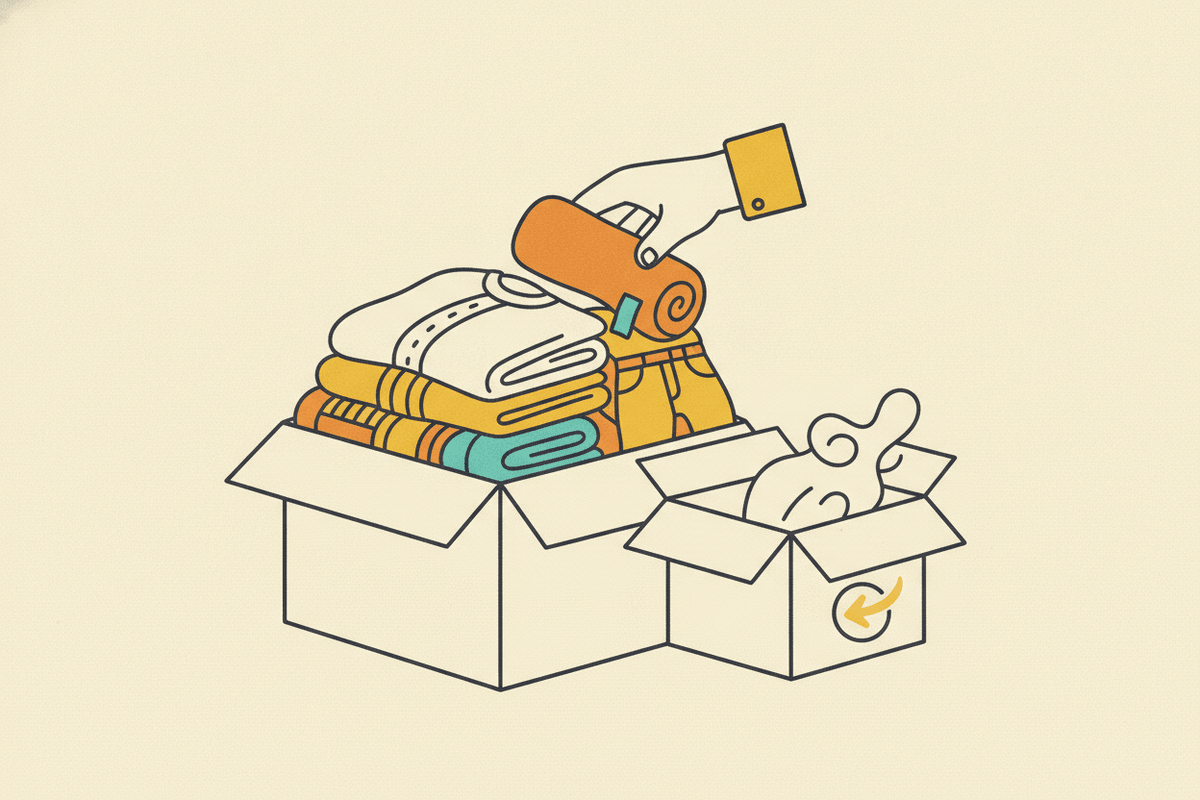
Belgium makes it genuinely easy to pass on clothes you no longer wear: collection bins on residential streets, charity shops that resell, and a recycling stream for the things that are past wearing. Almost none of it needs to go in the bin.
At a glance
The quickest route: collection bins
Textile collection containers stand on residential streets across Belgium, and dropping a closed bag in one takes a minute. The instructions are printed on the container itself and are worth reading, because operators differ slightly on what they accept — some take shoes and household textiles, others only clothing.
Clean, dry, and in a closed bag. This is the whole of the etiquette, and it decides what happens next: damp or dirty textiles contaminate everything they touch in the container, and a sorter will discard the lot. Shoes tied together in pairs, please.
Charities that resell
If the clothes are in good condition, a charity shop does more with them than a bin will.
- Oxfam — collection points and second-hand shops across the country; proceeds fund humanitarian work.
- Les Petits Riens / Spullenhulp — nationwide, selling through their own shops to fund social projects, and they will collect larger donations.
- Kringloopwinkels — the Flemish network of thrift stores, taking clothing alongside furniture and household goods.
All three are choosier than a street container, precisely because they intend to sell it. Take them the things you would be happy to buy.
Things past wearing
Torn, stained or worn-through textiles are still recyclable — as insulation, industrial cloth and fibre — so they belong in the textile stream rather than household waste. Mark the bag if the operator asks you to. What genuinely cannot go in: anything wet, mouldy, or contaminated with paint or oil.
Never leave bags beside a full container
It reads as a donation and is treated as fly-tipping — the contents get rained on and thrown away, and in most communes it is a fineable offence. If the bin is full, take the bag home and come back.
Before you give it away
Somebody in this community is furnishing a first flat right now. Clothes for children, winter coats and work clothes are the things newcomers most often need and least expect to have to buy in a hurry — offering them directly is worth more than the bin, and see furnishing your home for free for how that economy works here.
And if you are clearing a flat because you are going, do it before you surrender your residence card — the recyclepark asks for it. See leaving Belgium for good.
Written in 2024. Collection arrangements and accepted materials vary by commune and operator — check what is printed on your local container.
From our desk, not official advice
Written by the Namaste Community desk under our standing byline, from the questions this community asks most often — not a single person's own account. Rules change and offices differ — check anything that matters with the people who decide it.
Been through something too? Share itYour case is different? Ask people who’ve been through it
Members near you have dealt with daily how-tos themselves. Ask under your name or anonymously — answers come by email.
Ask the community — free