Moving & living guide · New Zealand
Indians in Auckland: the 2026 guide to Papatoetoe, Sandringham, Mount Roskill, Ōtāhuhu, Takanini and Flat Bush
175,794 people in the Auckland region gave Indian as one of their ethnic groups at the 2023 census — 10.6% of Aucklanders and about three in five of the 292,092 people of Indian ethnicity in New Zealand. The census counts the ethnicity people choose, whatever their birthplace or passport, so Fijian Indians and New Zealand-born Indians are in the figure. Most live in the south and on the isthmus: Papatoetoe, Ōtāhuhu, Manukau, Takanini and Flat Bush, Mount Roskill and Sandringham, with Henderson in the west. Sandringham Road and Hunters Corner in Papatoetoe are the two shopping streets people call Little India, Bharatiya Mandir on Balmoral Road is the first purpose-built Hindu temple in the country, and the Takanini gurdwara is the largest in New Zealand. The practical fact for 2026 is the rent: the median weekly rent on bonds lodged from March to August was NZ$580 in Papatoetoe and Sandringham, NZ$650 in Mount Roskill and NZ$720 in Flat Bush.
About 176,000 people of Indian ethnicity live in the Auckland region: 175,794 in the 2023 census. Source: Stats NZ, 2023 Census: Auckland region
1.Auckland at a glance
Correct or addContents ↑Auckland — Tāmaki Makaurau — is New Zealand's largest city and the centre of Indian life in the country. The 2023 census counted 1,656,486 usual residents in the Auckland region, and 175,794 of them gave Indian as one of their ethnic groups. That is 10.6% of Aucklanders, the fourth-largest ethnic group in the region after New Zealand European, Māori and Chinese, and about three in five (60.2%) of the 292,092 people of Indian ethnicity in New Zealand as a whole. The figure comes from Stats NZ and it counts ethnicity, not passports: a person chooses which groups they belong to, may choose more than one, and is counted whether they were born in India, Fiji, Kenya or Papatoetoe. It is also a count of people who usually lived in Auckland on census night, 7 March 2023, so anyone who arrived afterwards is not in it. In 2018 the Auckland number was 154,824, so the community grew by 20,970 people, about 13%, in five years.
The community lives across the whole region but not evenly. Stats NZ's 2023 tables, as summarised on Wikipedia, put the share of Indian residents at 25.2% in the Ōtara-Papatoetoe local board area, 22.6% in Puketāpapa (which is Mount Roskill) and 21.5% in Papakura (which takes in Takanini) — against 9.9% in Hamilton, the highest outside Auckland. Two suburbs claim the name Little India. Sandringham, seven kilometres from the city centre, has the restaurants, small supermarkets and halal butchers of Sandringham Road. Papatoetoe, in the south, is described as New Zealand's little India: at the 2018 census about 40% of its residents were of Indian ethnicity, and its Hunters Corner shopping area has about 60 shops, roughly 40 of them with an Indian flavour. Both are real, and both are covered below, with Mount Roskill, Ōtāhuhu, Manukau, Flat Bush, Takanini, Henderson and Pukekohe.
| Essential (October 2026) | Where / what |
|---|---|
| Population | Auckland region 1,656,486 usual residents (2023 census); the urban area 1,402,275 |
| Indian ethnic group | 175,794 in the Auckland region = 10.6% of Aucklanders (2023); 292,092 in New Zealand |
| Rents (Tenancy Services, March–August 2026) | Median weekly rent on bonds lodged: Ōtāhuhu NZ$450, Papatoetoe NZ$580, Sandringham NZ$580, Mount Roskill NZ$650, Takanini NZ$660, Flat Bush NZ$720 |
| Asking rents | Trade Me: Auckland median NZ$660 a week in August 2026; Barfoot & Thompson average NZ$699.40 in September |
| AT HOP fares (from 1 February 2026) | Adult NZ$3.00 for one zone, NZ$4.90 for two, NZ$6.50 for three, NZ$7.90 for four or more; NZ$50 7-day cap on an AT HOP card |
| Trains | The City Rail Link opened to the public on 13 September 2026 |
| Public health care | Yes if your work visa lets you stay two years or more; students and short visas, no |
| Schools | Children of a current work visa holder count as domestic students under the 2026 Notice; the Dependent Child Student Visa starts at NZ$750 |
| Minimum wage | NZ$23.95 an hour since 1 April 2026 |
| Diwali 2026 | Sunday 8 November; the free BNZ Auckland Diwali Festival is on Aotea Square on Saturday 31 October and Sunday 1 November, 12pm to 9pm |
| Indian consulate | Consulate General of India, Level 14, SAP Tower, 151 Queen Street; the High Commission is in Wellington |
The national rules — the Accredited Employer Work Visa, the Green List, the Skilled Migrant Category, tax and the IRD number, the driving licence — are in the New Zealand jobs guide, which this page does not repeat. The Indians in New Zealand page gathers the events, groups, businesses and city pages across the country. This page is about Auckland.
2.The community, and where it lives
Correct or addContents ↑Indians have been in New Zealand for longer than most people expect. The first known Indian resident was a Bengali lascar who left his ship in the Bay of Islands in 1809, and the first real wave of settlers came from the 1890s: mostly Punjabi and Gujarati teenagers, some arriving by way of Fiji, who worked as market gardeners and, in the twentieth century, became dairy owners — Te Ara maps Indian-owned dairies across Auckland as late as 1994. The Immigration Act of 1899 and the restrictions of the 1920s kept the numbers small, and the hostility was open: in Pukekohe, where Mitha Unka had settled in 1918, a White New Zealand League was formed in December 1925 in response to Chinese and Indian market growers, and in 1932 some 1,400 locals petitioned Parliament to repatriate them. Parliament dismissed the petition in 1934. The community answered by organising: the New Zealand Indian Central Association was formed in 1926 with three branches, one of them Auckland, and Pukekohe's Nehru Hall, built in 1953, was the first Indian community hall in the country.
Three later changes made Indian Auckland what it is. Immigration rules relaxed in the 1980s. The Fiji coups of 1987 brought Indo-Fijian families, who formed a substantial community in Sandringham. And skilled migration, family sponsorship and students from India took the group to the present scale: nationally the Indian ethnic group grew by 88.2% between the 2013 and 2023 censuses, to 292,092, and by 52,899 people (22.1%) between 2018 and 2023 alone. Bharatiya Mandir's own history dates its start to a group of Auckland Hindus in 1986 and the finished building to June 1993.
What the census says, 2023
| Measure | 2023 |
|---|---|
| Auckland region usual residents | 1,656,486 |
| Indian ethnic group, Auckland region | 175,794 (10.6%); 154,824 in 2018 |
| Indian ethnic group, New Zealand | 292,092 (5.8%), the third-largest ethnic group nationally; 60.2% of them live in the Auckland region |
| Asian ethnic groups, Auckland region | 518,178 (31.3%): Chinese 38.0%, Indian 35.4%, Filipino 9.3% of that group |
| Indian group, Auckland: age | Median 33.2 years against 35.9 for all Aucklanders; 20.3% under 15, 72.2% aged 15–64, 7.5% aged 65 or over |
| Hindi speakers, Auckland region | 49,644 (3.0% of Aucklanders; people can name more than one language) |
| Sikhs | 28,401 in the Auckland region (1.71%); 53,406 in New Zealand |
| Highest Indian shares by local board | Ōtara-Papatoetoe 25.2%, Puketāpapa 22.6%, Papakura 21.5% |
The Indian group is young and still growing. Nationally, Punjabi was the fastest-growing widely spoken language between 2018 and 2023, up 45.1%, Hindi is the fourth most spoken language in the country and Punjabi the ninth. At the 2018 census, the last year for which we found a religion breakdown of the Indian group, 46.6% were Hindu, 21.4% Sikh, 15.1% Christian and 8.7% Muslim, with 8.1% giving no religion.
The community is not one community. Gujarati families were among the first settlers and built much of the dairy and grocery trade; Bharatiya Mandir's library holds its books in Hindi, English and Gujarati, and the Swaminarayan mandirs in Avondale and Papatoetoe are Gujarati institutions. Punjabi Sikhs, whose first families settled in the Waikato from the 1950s, now have more people in Auckland than anywhere else — 28,401 of New Zealand's 53,406 Sikhs — and the gurdwaras of Takanini, Papatoetoe, Ōtāhuhu, Manurewa and Papakura are theirs. Fijian Indians — 23,808 people at the 2023 census, counted inside the Indian group — are a distinct community with their own food, Fiji Hindi and a long presence in Sandringham, Papatoetoe and Ōtāhuhu, where shops such as Fiji Mithai and Fiji Curry House trade. And the newest part of the community is South Indian and Marathi: the national umbrella body's associate members include the New Zealand Telugu Association, Muthamil Sangam Auckland, the Auckland Tamil Association, the Auckland Malayali Samajam, the Telangana Association of New Zealand, the Auckland Marathi Association, New Zealand Kannada Koota, the Probasee Bengali Association and the New Zealand Punjabi Cultural Association.
Where Indians live in Auckland
- Papatoetoe (47,907 people in 2023; 48.1% Asian, 35.5% Pasifika, 17.5% Hindu) — the suburb with the highest Indian share we found (about 40% in 2018), on the Southern railway line, with gurdwaras on Kolmar Road, Dunnotar Road and Shirley Road, a Swaminarayan mandir on Wentworth Avenue and the shops of Hunters Corner and Great South Road.
- Sandringham (11,514 people; 36.5% Asian, 11.3% Hindu; median personal income NZ$50,300 against NZ$41,500 nationally) — close to the city and to Bharatiya Mandir on Balmoral Road; the median house sale price there rose from NZ$365,000 in 2014 to NZ$1.171 million in 2023, which is part of why much of the newer Indian settlement is further south and east.
- Mount Roskill (25,743 people; 52.8% Asian, 14.6% Hindu; 54.8% born overseas; median income NZ$39,000) — Gujarati and Punjabi families around Dominion Road and Stoddard Road, in the Puketāpapa board where 22.6% of residents are Indian.
- Ōtāhuhu and Māngere (Ōtāhuhu: 14,778 people, 49.6% Pasifika, 27.6% Asian, 7.1% Hindu) — a Pacific-majority suburb with the Princes Street gurdwara and, in Māngere, the Murugan (Thiru Subramaniyar) temple on Tidal Road; the lowest rents in this guide.
- Manukau, Manurewa, Takanini and Papakura — Takanini has grown from 10,845 people in 2018 to 14,436 in 2023 (54.7% Asian, 12.9% Hindu) around the largest gurdwara in the country; Manurewa has Nanaksar on Great South Road.
- Flat Bush and Botany (Flat Bush: 45,147 people, up 40.0% since 2018; 71.6% Asian, 15.2% Hindu) — a planned suburb of new houses in the east, the newest of the Indian suburbs and the dearest to rent in this guide.
- Henderson (16,503 people; 31.4% Asian, 5.7% Hindu) — West Auckland, with Shri Ram Mandir on Brick Street.
- Pukekohe (27,042 people; 17.2% Asian, 3.9% Hindu) — an early Indian market-gardening settlement, with the Pukekohe Indian Association and electric trains since February 2025.
- The North Shore — Northshore Diwali at Smales Farm and a gurdwara at Hillcrest.
The rule of thumb: Papatoetoe, Takanini and Mount Roskill have the largest Indian shares; Sandringham is the Indian high street; Flat Bush is the newest and dearest to rent; Ōtāhuhu is the cheapest.
3.Your first two weeks in Auckland
Correct or addContents ↑The national paperwork — the IRD number, a bank account, tax codes — is in the jobs guide. This is the Auckland version, in the order that works here.
- A short stay, not a lease. Landlords and property managers ask for references, a job letter and a bank history you do not yet have, and a week or two in a short-term room lets you see houses in person and choose a suburb after you know where you will work. Never pay a deposit, bond or "holding fee" for a house you have not stood inside, and never pay anyone who is not the landlord or the property manager named on the listing.
- Your IRD number. Apply online as a new arrival on your first days; the jobs guide has the steps. Without it your employer must tax you at 45%.
- A bank account and a phone. The large banks open accounts for new migrants on a passport and visa; the three main mobile networks are One NZ, Spark and 2degrees, and Numbeo's crowd-sourced figure for a plan with 10 GB or more is NZ$47 a month and for broadband of 60 Mbps or more NZ$90.50 (21 October 2026).
- An AT HOP card, or just your bank card. A card costs NZ$5 and you top it up; vending machines at both Auckland Airport terminals sell it with credit already on it. You can also tap a contactless bank card or phone on buses, trains and most ferries. See getting around.
- Enrol with a GP, if you are eligible. A work visa that lets you stay two years or more qualifies; a shorter one does not. Reduced doctor's fees apply only when you enrol with a practice, so do this in week one. See health.
- Schools. A child whose parent holds a current work visa counts as a domestic student for school fees, but the child still needs a visa that allows study, normally the Dependent Child Student Visa. See schools.
- Your driving licence. Arrivals from 1 November 2026 may drive on an Indian licence for 12 months; earlier arrivals keep the 18-month extension while they stay. India is not an exempt country, so converting means a theory test and a practical test; the jobs guide has the details.
- Know the weather. Auckland is warm and humid in summer and mild but wet in winter, and rented houses can be cold and damp indoors; the Healthy Homes standards in renting set minimum levels of heating, insulation and ventilation.
- The mandir, the gurdwara or the association. The Sunday service at Bharatiya Mandir, langar at a gurdwara in Papatoetoe or Takanini, or the Auckland Indian Association's hall will give you the name of a landlord, an accountant and a GP faster than any website — and the Auckland groups on Namaste Community do the same without your having to know anyone first.
- Check anyone who asks for money. Immigration New Zealand warns on its Accredited Employer Work Visa page that job-offer scams are common in India and South Asia, and it will decline an application if you or an agent offered money to an employer for the job. If an employer, agent or "consultant" asks you to pay for a job, a visa or a letter, stop and read the scams section of the jobs guide.
4.Neighbourhoods and renting: 2026 rents by suburb and the Tenancy Services rules
Correct or addContents ↑Rent is the largest line in an Auckland budget and the most thoroughly documented. The Ministry of Business, Innovation and Employment publishes the rent on every bond lodged with Tenancy Services, and its market-rent tool, opened suburb by suburb on 23 October 2026, covers the six months from 1 March to 31 August 2026. The figures below are weekly rents in New Zealand dollars. "Bonds" are the number of tenancies in the sample, so a large number means the median is reliable.
| Suburb | Census 2023 | Bonds | Lower – median – upper quartile | Typical lines (median) |
|---|---|---|---|---|
| Ōtāhuhu | 14,778 people; 49.6% Pasifika, 27.6% Asian | 2,602 | 350 – 450 – 580 | 3-bedroom house 620; 2-bedroom flat 430; a room 270 (132 bonds) |
| Papatoetoe | 47,907 people; 48.1% Asian, 35.5% Pasifika | 4,996 | 475 – 580 – 680 | 3-bedroom house 650 (1,502 bonds); 2-bedroom flat 500; a room 400 |
| Sandringham | 11,514 people; 36.5% Asian | 1,668 | 490 – 580 – 715 | 3-bedroom house 700; 2-bedroom flat 510; 2-bedroom apartment 550 |
| Henderson | 16,503 people; 31.4% Asian | 3,843 | 500 – 595 – 680 | 3-bedroom house 600 (1,624 bonds); 2-bedroom flat 480 |
| Pukekohe | 27,042 people; 17.2% Asian | 2,442 | 490 – 590 – 670 | 3-bedroom house 600; 2-bedroom flat 450 |
| Mount Roskill | 25,743 people; 52.8% Asian | 2,622 | 541 – 650 – 750 | 3-bedroom house 675 (1,047 bonds); 2-bedroom flat 520 |
| Takanini | 14,436 people; 54.7% Asian | 1,224 | 550 – 660 – 750 | 3-bedroom house 650; 4-bedroom house 750 |
| Manukau (city centre) | Apartments and the bus and train interchange | 616 | 430 – 520 – 600 | 1-bedroom apartment 440; 2-bedroom apartment 550; 3-bedroom house 665 |
| Flat Bush | 45,147 people; 71.6% Asian | 2,936 | 580 – 720 – 850 | 3-bedroom house 695; 4-bedroom house 795 (683 bonds); 2-bedroom apartment 590 |
| Auckland Central | Apartments | 14,841 | 400 – 475 – 570 | 1-bedroom apartment 445 (6,275 bonds); 2-bedroom apartment 550 |
Read across, the pattern is plain. Ōtāhuhu is the cheapest at a median of NZ$450 a week, Flat Bush the dearest at NZ$720. Flat Bush's tenancies are mostly houses (683 four-bedroom bonds alone, at a median of NZ$795), while Ōtāhuhu's include more than 900 one- and two-bedroom flat and apartment bonds and 132 single rooms at a median of NZ$270. A two-bedroom flat in Papatoetoe has a median rent of NZ$500 against NZ$550 for a two-bedroom house, and a three-bedroom house is NZ$650 there. The city centre is cheaper in these tables than most suburbs because most of its bonds are for apartments, not houses.
The asking market, beside the bonds
Bond medians describe tenancies already running; asking rents describe what a newcomer meets. Trade Me's Rental Price Index put the Auckland median asking rent at NZ$660 a week in August 2026, level with Bay of Plenty and behind Otago (NZ$700) after Otago's 8% monthly jump, and the national median at NZ$625, up NZ$5 on a year — the first annual rise in 18 months. The Auckland agency Barfoot & Thompson reported an average of NZ$699.40 for September 2026 across 719 new lettings, its busiest month of the year and 0.9% above a year earlier (reported on 9 October 2026). Trade Me noted that large houses are the pressure point, with rents for homes of five or more bedrooms up close to 9% on the year to NZ$1,100 a week nationally as groups and multi-generational households split costs. For a family, that is the part of the market that matters most.
The rules (Tenancy Services)
- Bond. The most a landlord can charge is four weeks' rent, and they must lodge it with Tenancy Services, which holds it; a pet bond of up to two weeks' rent can be asked for where the landlord consents to a pet kept from 1 December 2025.
- Rent in advance. It is unlawful to ask for more than two weeks' rent in advance.
- No letting fees, no key money. Landlords and agents cannot charge tenants a letting fee. A tenant may pay an option fee to hold a property while deciding, capped at one week's rent and refunded or credited to the rent if you take it.
- Rent increases. At most once every 12 months, with at least 60 days' written notice; in a fixed-term tenancy only if the agreement allows it. The law does not cap the amount: if the new rent is above the market, you negotiate with market-rent evidence and can apply to the Tenancy Tribunal.
- Ending a tenancy. A tenant gives 21 days' written notice. A landlord can end a periodic tenancy with 90 days' written notice without giving a reason, or 42 days if the owner or a family member will move in or the house has been sold with vacant possession. Notice may not be retaliatory.
- Healthy Homes. Every rental must meet five standards — heating, insulation, ventilation, moisture ingress and drainage, and draught stopping — and new or renewed tenancy agreements must include the landlord's compliance statement.
- Put it in writing. A written tenancy agreement, a bond receipt from Tenancy Services and a rent record are your protections; Tenancy Services publishes translated guides, and disputes go to the Tenancy Tribunal.
Scams and shared houses
Many new arrivals share. A room in a shared house can be a room-by-room tenancy with its own rules, and boarding houses have separate ones. The patterns to refuse are the usual ones: a house at far below the going rate, a landlord who is "overseas", a request to pay the bond before a viewing, pressure to pay in cash, or a request for your passport as "security". Pay only after you have seen the house, met the person and checked their name against the tenancy agreement, and check that your bond has been lodged with Tenancy Services.
5.Getting around: AT HOP fares, the City Rail Link, buses, the airport and the fuel shock
Correct or addContents ↑Auckland's public transport changed three times in the year to October 2026: fares rose in February, the City Rail Link opened in September, and a fuel-price shock made the bus and the train look cheaper than the car. A budget built from an older forum post needs redoing.
Fares from 1 February 2026
Auckland Transport (AT) put fares up by a weighted average of 5.1% on 1 February 2026 — 10 to 25 cents more a trip on buses and trains, 40 to 60 cents on ferries. Fares depend on the number of zones, and since the zone map was simplified in 2025 a bus or train journey is never charged for more than four.
| Adult fare (2026) | AT HOP card or contactless |
|---|---|
| Citylink bus | NZ$0.95 (was 0.85) |
| 1 zone | NZ$3.00 (was 2.80) |
| 2 zones | NZ$4.90 (was 4.65) |
| 3 zones | NZ$6.50 (was 6.25) |
| 4 or more zones | NZ$7.90 (was 7.65) |
Cash fares exist only on trains (NZ$4 for one zone, rising to NZ$10 for four or more) and are not accepted on buses. An AT HOP card costs NZ$5 plus credit: NZ$10 including NZ$5 of credit online, or NZ$25 including NZ$20 from the vending machines at both Auckland Airport terminals and the Downtown and Devonport ferry terminals. Register the card on a MyAT account, which lets you top up online, set up auto top-up, apply for concessions and recover your credit if the card is lost. You can also tap a contactless bank card or phone, but you cannot pay for more than one person with it, and AT's advice is to use the same method for the whole journey so that transfers are recognised.
Caps and concessions
- NZ$50 a week. AT HOP card users pay no more than NZ$50 in any 7 days — about NZ$217 a month at most.
- NZ$20 a day. Contactless payers are capped at NZ$20 a day.
- 40% off for children aged 5 to 15 (who also travel free at weekends and on public holidays), secondary students aged 16 to 19 and full-time students at registered Auckland tertiary institutions.
- Community Connect: half price with a Community Services Card, plus a free AT HOP card.
- SuperGold: free after 9am on weekdays and all day at weekends and on public holidays.
- Fareshare: a subsidy if your employer has signed up to it.
Every concession needs a registered AT HOP card; none works with contactless or cash.
The City Rail Link
The City Rail Link opened to the public on Sunday 13 September 2026, two days after the official opening. It added two underground stations, Te Waihorotiu in midtown and Karanga-a-Hape (entrances at Mercury Lane and Beresford Square), and rebuilt Maungawhau. Auckland's network is now organised as lines. The East West line runs from Swanson to Manukau through Henderson, New Lynn, Maungawhau, Karanga-a-Hape, Te Waihorotiu, Waitematā, Ōrākei, Panmure, Ōtāhuhu and Puhinui; the South City line runs from Pukekohe to Newmarket and a loop around the city centre. AT lists trains every 15 minutes off-peak and, on average, every 10 minutes at peak (7am to 9am and 4pm to 7pm). Papatoetoe and Puhinui stations are served by both lines, Takanini has a station on the South City line, and electric trains have run to Pukekohe since February 2025. Wikipedia reports that the first week carried 528,007 boardings, above the previous weekly record of 504,380 set in March 2019.
Buses
AT's frequent routes run at least every 15 minutes from 7am to 7pm, seven days a week. The ones that matter here are the 24B and 24R along Sandringham Road, the 25B and 25L through Mount Roskill, routes 12, 13 and 15 in Henderson, 35 and 36 at Manukau and 33 from Papakura to Ōtāhuhu. AT changed several bus timetables from 13 September 2026, so check the Journey Planner for your own route before you choose a house by its bus.
The airport and flights home
Auckland Airport handled 18.5 million passengers in 2024. The orange AirportLink bus runs from Puhinui Station and Manukau Bus Station to the domestic and international terminals every 10 minutes from 4:30am to 12:40am, and Route 38 links the airport with Māngere and Onehunga every 15 to 20 minutes. Puhinui is where the East West and South City lines connect with the airport bus. We found no nonstop flight between India and Auckland in October 2026: Air India and Air New Zealand agreed a codeshare in March 2025 that connects through Sydney, Melbourne or Singapore, and said they would examine a direct service by 2028. Check both airlines' sites before you book.
Driving, and the price of petrol
New Zealand has imported all its refined fuel by ship since the Marsden Point refinery closed, so it is exposed to world oil prices. Stats NZ reports that petrol prices rose 24.3% and diesel 55.8% in the year to September 2026, with petrol up 6.4% and diesel up 7.8% in September alone. Gaspy's average for 91-octane petrol reached NZ$3.505 a litre on 5 October 2026, just above the NZ$3.502 peak of April, with Brent crude above US$100 a barrel and a weaker New Zealand dollar; Numbeo's crowd-sourced figure on 21 October was NZ$3.29. AT said in May that public transport fares were not rising as part of the national fuel supply response. Your driving licence, and how long you can use an Indian one, are in the jobs guide.
6.Work and employers: the 2026 Auckland market, the visas and the premium scam
Correct or addContents ↑Auckland has the country's largest job market and, in 2026, unemployment above the national rate. The jobs guide sets out the national picture: unemployment of 5.6% in the June 2026 quarter, Auckland at 6.5% — its highest-equal rate since 2013 — and a government that has cut public-service roles. The same guide records the one improvement: SEEK's Auckland job ads rose at their fastest monthly pace in four years in August 2026, led by hospitality, manufacturing, transport and logistics. The honest reading is a market that is hiring but is not easy for someone applying from India.
What Auckland does for a living
At the 2023 census, 874,056 Aucklanders were employed. The largest industries were professional, scientific and technical services (12.1%), construction (10.2%), manufacturing and retail trade (9.0% each), health care and social assistance (8.7%), education and training (7.6%) and wholesale trade (6.6%). The institutions with a documented base in the region include Health New Zealand's hospitals — Auckland City, Middlemore, North Shore and Waitākere — Auckland Council, the University of Auckland (founded in 1883, the largest university in the country) and AUT, and Auckland Airport. Warehouses and factories cluster in the south and east, in places like East Tāmaki, Wiri and Penrose. Indian-owned grocers, restaurants, accountants and travel agents, listed in the Indian businesses directory for New Zealand, hire too.
The visas, briefly
- Accredited Employer Work Visa (AEWV). Immigration New Zealand's page gives the fee as from NZ$1,540, with 80% of applications decided within five weeks; you need two years' relevant experience or a level 4 qualification, and the maximum stay is five years for most jobs and three for ANZSCO level 4 or 5 jobs. The job must be advertised in public first, and the page warns that job-offer scams are common in India and South Asia.
- Green List. Tier 1 roles — registered nurses, doctors, most engineers and a group of ICT jobs paid NZ$72.80 an hour or more — lead straight to residence; Tier 2 trades lead to it after 24 months.
- Skilled Migrant Category. Since 24 August 2026 it has three pathways. On the points-based one you need 6 points, and an overseas bachelor's degree is worth 4; pay at three times the SMC wage threshold, currently NZ$105 an hour, is worth 6 on its own. You must be 55 or younger, and a residence application starts at NZ$6,450.
- The India–New Zealand free trade agreement entered into force on 20 October 2026, and Immigration New Zealand opened its two work visas that day — the India Skilled Work Visa and the India Iconic Work Visa, up to 5,000 holders at a time, each needing an offer from an accredited employer (the jobs guide has the detail). The working holiday scheme still needs its own category; anyone selling a place in one today is selling nothing.
The minimum wage is NZ$23.95 an hour from 1 April 2026. Tax, KiwiSaver, the IRD number, nursing and medical registration, and what each visa lets your family do are all in the jobs guide; they do not change in Auckland.
The premium scam, in Auckland
The most important warning for an Indian worker in Auckland is that you never pay for a job. In June 2026 the Employment Relations Authority found that Auckland City Lawns' operator, 7 Solutions Limited, had breached the Wages Protection Act by seeking and receiving a premium for a job from a migrant worker, and ordered the company to pay a NZ$16,000 penalty, its sole director an NZ$8,000 penalty payable to the worker, and the NZ$44,750 premium to be repaid. MBIE's Labour Inspectorate called it serious exploitation and said minimum employment standards apply whatever a worker's visa. Immigration New Zealand has also investigated the exploitation of Indian and Bangladeshi nationals in Auckland. If you are asked to pay, or to hand back wages, report it to MBIE on 0800 200 088; the jobs guide explains the Migrant Exploitation Protection Work Visa, which lets a victim leave the employer and stay.
What helps
Check an employer against Immigration New Zealand's accredited-employer list before you send documents. Use the Indian associations and temples, whose members will know which employers are hiring and which are not. And check the commute as well as the rent in neighbourhoods and renting: the cheaper suburbs are in the south, and a long commute adds fares or petrol.
7.What Auckland costs in 2026
Correct or addContents ↑Auckland is among the most expensive places to rent in New Zealand — Trade Me's August median of NZ$660 a week was second only to Otago's NZ$700 — and rent is the largest line in a household budget. The prices below are Numbeo's crowd-sourced averages, last updated on 21 October 2026 and opened on 23 October; they are a guide, not a statistic, and the sources for rents are the Tenancy Services bond data in the renting section.
| Item (Numbeo, 21 October 2026, NZ$) | Auckland |
|---|---|
| Inexpensive restaurant meal | 25.00 |
| Mid-range meal for two (three courses, no drinks) | 120.00 |
| Milk, 1 litre | 3.42 |
| Rice, 1 kg | 3.30 |
| Eggs, dozen | 11.18 |
| Chicken fillets, 1 kg | 17.73 |
| Onions / tomatoes, 1 kg | 2.75 / 10.34 |
| Utilities for an 85 m² home, a month | 324.31 |
| Mobile plan (10 GB or more), a month | 47.00 |
| Broadband (60 Mbps or more), a month | 90.50 |
| Gym membership, a month | 74.23 |
| One-way local transport ticket | 4.50 |
| Petrol, 1 litre | 3.29 |
| One-bedroom apartment, centre / outside, a month | 2,342 / 2,173 |
| Three-bedroom apartment, centre / outside, a month | 3,878 / 2,970 |
| Average monthly net salary | 5,226 |
| Private full-day preschool, a month | 1,876 |
| International primary school, a year | 34,564 |
The fixed costs, worked through
The Tenancy Services median for a three-bedroom house in Papatoetoe is NZ$650 a week, which is about NZ$2,817 a month (650 × 52 ÷ 12). Add Numbeo's utilities (NZ$324), broadband (NZ$91) and one mobile plan (NZ$47) and a family's fixed costs are about NZ$3,280 a month before food, transport, childcare and insurance. The jobs guide's take-home figures for 2026 — about NZ$55,550 a year from a NZ$70,000 salary and NZ$75,370 from NZ$100,000, before KiwiSaver — are NZ$4,630 and NZ$6,280 a month. On the lower salary the fixed costs take about 71% of take-home pay; on the higher one, about 52%. A two-bedroom flat in Papatoetoe at the NZ$500 median (NZ$2,167 a month) brings the share on the lower salary down to about 57%. That arithmetic is why many new arrivals share a house for their first months.
What saves money
- Groceries from an Indian supermarket. Rice, atta, dal, spices and vegetables are a large part of an Indian household's basket, and the independent grocers in Papatoetoe, Mount Roskill, Takanini and Sandringham sell them in bulk; compare the per-kilo price with the mainstream chains before you decide.
- The weekly fare cap. At NZ$50 a week, a commuter never pays more than about NZ$217 a month for buses and trains, against a petrol price of NZ$3.29 to NZ$3.50 a litre.
- Where you rent. Ōtāhuhu's NZ$450 median and Papatoetoe's NZ$580 against Flat Bush's NZ$720 is a difference of up to NZ$270 a week, or about NZ$1,170 a month, for a suburb with a train and bus interchange and a gurdwara.
- Shared houses. Trade Me says groups and multi-generational households are pushing up the rents of large houses, which is the rent a joint family will pay.
What costs more than expected
Heating in winter; car and contents insurance; childcare, where Numbeo's NZ$1,876 a month for a private full-day place is the benchmark before any subsidy; and petrol. Sending money home is a cost most households carry, so compare the exchange rate as well as the fee each time you do it.
8.Health: who gets public care, enrolling with a GP, and where to go
Correct or addContents ↑New Zealand has a publicly funded health system, but whether you are in it depends on your visa. The rule, from Health New Zealand's eligibility page, is simple to state and easy to get wrong.
Who qualifies
- Residents and citizens are eligible for publicly funded health services.
- Work visa holders are eligible if their visa lets them stay in New Zealand for two years or more — Immigration New Zealand and govt.nz are explicit that a work visa starts on your first day in the country — or if their total lawful time in New Zealand, including earlier visas, reaches two years. A 25-month visa that begins before you land can leave you with less than 24 months here, which is why Immigration New Zealand told its own staff in 2016 to allow for travel time when granting a 24-month visa. A visa shorter than two years does not qualify.
- Children aged 17 or under in the care of an eligible parent are eligible. Partners must meet the criteria themselves, except for maternity services.
- Students on temporary visas cannot get publicly funded health care, with narrow exceptions for scholarship holders. Pregnant women on visas who are not eligible must pay for maternity care. Students need medical insurance.
- Visitors are not eligible, apart from limited cases such as emergency care; Immigration New Zealand says anyone not eligible, or their sponsor, must pay for the care they need.
- ACC, the no-fault injury scheme, covers accidents for residents and visitors alike: your doctor makes the claim and ACC must accept it before it pays.
Health NZ's page says that changes to who can get publicly funded services take effect from 1 December 2026. The Ministry of Health says the main change is to extend eligibility to people on the Migrant Exploitation Protection Work Visa and the Victims of Family Violence Work Visa, that measles and polio immunisations will be funded for everyone regardless of visa, and that most people's eligibility is unchanged. Check your own visa against the Health NZ page before you rely on this.
Enrolling with a GP
You can enrol with a general practice only if you are eligible, and the reduced fee applies only if you are enrolled. Take your passport and e-Visa letter, which is the proof the practice will ask for, and enrol in your first week rather than when you are ill. Children under 14 get free GP visits at most practices and usually free medicines, and dental care is free for eligible children up to 18. Adults pay for dental care, and fees for GP visits are set by each practice. In Papatoetoe, Mount Roskill, Takanini and Sandringham, ask a practice whether it has a doctor who speaks your language, or ask in the Auckland groups.
The hospitals
| Area | Hospital |
|---|---|
| Ōtāhuhu, Papatoetoe, Manukau, Takanini | Middlemore Hospital, in the Counties Manukau district |
| Sandringham, Mount Roskill, central Auckland | Auckland City Hospital, with Starship Children's Hospital |
| Henderson and West Auckland | Waitākere Hospital |
| The North Shore | North Shore Hospital |
When to call
For a life-threatening emergency, call 111. Healthline (0800 611 116) is a free, 24-hour nurse advice line. 1737 is a free call or text, day or night, to talk to a counsellor. Your practice will tell you where the nearest after-hours clinic is; ask that on the day you enrol.
Support
Gurdwaras serve langar to anyone who comes, and the mandirs and associations hold regular gatherings. Loneliness in the first winter is common enough among people who arrived alone that it is worth naming; a weekday aarti, a Sunday langar or an association's picnic is a reasonable response, and the groups listed below are another.
9.Schools, zones, fees by visa and the universities
Correct or addContents ↑Most children start school at five, school or home education is compulsory from six to sixteen, and enrolment and education at a state school are free for domestic students between the ages of five and nineteen. Whether your child is a domestic student is a question of visas, and the Ministry of Education's circular, last updated on 15 October 2026, sets the rule.
Domestic or international, by visa
- Domestic, permanent: New Zealand citizens, holders of a residence class visa and Australian citizens.
- Domestic, time-bound: under the Education (Domestic Students) Notice 2026, a child whose parent has a current work visa (or a current interim visa extending one) is a domestic student for as long as the parent's visa lasts. Refugees and protected persons have their own category.
- International: everyone else, who is not funded by the Ministry and pays fees. The school sets the fee; Numbeo's crowd-sourced figure for an international primary school in Auckland is NZ$34,564 a year.
The Ministry's rule is about fees. Immigration New Zealand's rule is about the visa. A child of a work visa holder normally needs a Dependent Child Student Visa, which costs from NZ$750, is decided within eight weeks for 80% of applications, and is open to children aged 19 or younger who are financially dependent. For an Accredited Employer Work Visa holder, the child's eligibility depends on earnings, the job and whether the parent supported the child for a visa on or before 26 June 2024. The jobs guide sets out the income and skill-level tests. Domestic status covers school only: a child who wants a university course needs a Fee Paying Student Visa and pays international fees.
Zones and enrolling
A school with an enrolment scheme has a home zone, and a child who lives in it is guaranteed a place. You must give an address that is your usual place of residence and may be asked for a tenancy agreement, a certificate of title or utility bills. A false or temporary address gets the enrolment annulled once it is discovered. This is why the school you want decides where you rent, and why it is worth checking a school's zone on the Ministry's tool before you sign a lease. Bring your child's birth certificate or passport and any medical information; a school with no enrolment scheme must accept your child's enrolment.
Colleges and universities
The University of Auckland is the largest university in the country; AUT and Massey University's Albany campus are the other large universities in the region. A student visa does not give you access to public health care, so insurance matters. How a New Zealand degree now counts towards residence (a New Zealand bachelor's is worth 5 points and a master's 6) is in the jobs guide.
Childcare
Early childhood education is charged by the centre. Numbeo's crowd-sourced figure for a private full-day place in Auckland is NZ$1,876 a month; put your child's name on the lists of several centres as soon as you have an address, and ask each what it charges and what is subsidised for your visa.
Heritage languages and classes
Language and culture classes run through the temples, gurdwaras and associations. Bharatiya Mandir lists activities for children, language, learning, maths and computers and a library in Hindi, English and Gujarati; the Supreme Sikh Society's site lists a Sikh Heritage School and the NZ Sikh Sports Complex at Takanini. Ask the mandir or gurdwara nearest you for the current timetable: it changes each term.
10.Indian groceries, sweets, halal and where to eat, by suburb
Correct or addContents ↑Nothing in an Indian kitchen is hard to find in Auckland; the question is which suburb. The names below come from three kinds of source, and the difference matters. Satya is confirmed on its own website. The Sandringham businesses described as such are from The Spinoff's July 2024 report on the street. Everything marked as mapped is from OpenStreetMap as it stood on 22 October 2026 — a recent community listing in which closures are not always recorded. Opening hours change, and a shop that was open in July 2024 may not be now, so check before you travel.
Sandringham Road
Sandringham Road is one of the two streets people mean by Little India. The first restaurant was a Thai one in the 1990s; Stan's Halal Hotpot (Fijian-Indian food), which opened in 2001, has closed. Satya, a family restaurant that The Spinoff calls an institution, still trades from Sandringham, with the Satya Chai Lounge beside it. The Hyderabadi restaurant Paradise has shrunk from three outlets, Pista House is its haleem and chai-biscuit food truck, Bawarchi serves a Hyderabadi buffet and Shubh is vegetarian. For groceries, The Spinoff names SS Supermarket, run for nearly two decades by Nithya Suresh and known for South Indian ingredients and mangoes, with Madras Cafe next door, and the small Smart Deal Bazaar and Sandringham Superette; OpenStreetMap also maps Top in Town: Food City, Auckland Indian Sweets & Snacks at 582 Sandringham Road, Mumbai Chaat at 1A Kitchener Road, the halal butchers Auckland Halal Meats (526) and Khan's Halal Butchery (543), and St Anthony's Food, a Sri Lankan restaurant at 583. Khyber Spice Traders, one of the first Indian grocers, is gone. The Spinoff's reading of the street is that it is under gentrification pressure: an ice-cream shop charging NZ$9 a scoop opened and was replaced by a dessert shop.
Papatoetoe: Hunters Corner and Great South Road
Hunters Corner is the shopping area Wikipedia describes as popular with shoppers of Indian origin. As mapped, the sweet and snack shops include Halwai (204 Great South Road) and Fiji Mithai (13A Saint George Street); the restaurants Siri Dosa Bhavan (354 Great South Road), Curry Palace (366), Biryaniwala (162), Hunters Corner Curry House (147 Kolmar Road), Karachi Indian Cuisine and Mela Indian Cuisine (Shirley Road); the supermarkets DH Supermarket (141 Kolmar Road and 17 Shirley Road), GS Supermarket (355 Great South Road) and Top 1 Supermarket (308 Great South Road); the halal butchers Makkah Halal Butchers (139 Great South Road) and Hunters Food Town; and Bollywood Mart (Charles Street) and Indian Music World (Saint George Street) for gifts and films. Bikanervala, the sweets and snacks chain that began in Chandni Chowk in Delhi and opened its first New Zealand shop in Auckland on 7 April 2008, sells by the kilogram and delivers in Auckland the same day if you order before noon; its store locator lists the current shops.
Ōtāhuhu, Mount Roskill, Takanini and elsewhere
- Ōtāhuhu (mapped): Indian Sweets & Snacks (54 Atkinson Avenue), Balaji Food (89 Princes Street), the supermarket Food 4 Less (64 Atkinson Avenue), Fiji Curry House (14 Station Road), Otahuhu Butter Chicken Centre (277 Great South Road) and halal butchers on Station Road and Great South Road.
- Mount Roskill (mapped): Bombay Bazaar (161 Stoddard Road), Patidar Foods (26 Carr Road), Mount Roskill Fresh Supermarket (32 Carr Road), Spice Traders (22 Stoddard Road) for Indian food, Authentic Indian Bakery Cafe (82 Carr Road), Biryaniwala (1222 Dominion Road) and Falaq Biryani House (1480 Dominion Road).
- Takanini and Papakura (mapped): Punjab Food and Spices and DH Supermarket (O'Shannessey Street), Sadar ji Indian Grocery Store (180 Great South Road), Gujju Chaat House (127 Great South Road), Mithaiwala (223 Great South Road) and Punjab Express (315).
- Flat Bush and East Tāmaki (mapped): DH Supermarket (46 Ormiston Road), Dosa Plaza, Indian Accent, East Tamaki Supermarket (269 East Tāmaki Road) and Zabiha Meats (Ormiston Road).
- Manukau (mapped): Empress of India (792 Great South Road), Coffee-Cake-Chaat and Punjabi Kitchen.
- Henderson (mapped): Biryaniwala (330 Great North Road), Desi Dhamaal Restaurant (370 Great North Road), Chapati Indian Restaurant and Westcity Halal Meats.
- Pukekohe (mapped): Indo Kiwi Supermarket (7b Hall Street), Ganesh Sweets (West Street), Curry Leaf (Edinburgh Street) and The India Restaurant Bar (King Street).
Halal, vegetarian and sweets
Halal butchers are mapped in Sandringham, Papatoetoe, Ōtāhuhu, Mount Roskill, Takanini, Flat Bush, Manukau and Henderson. For mithai before Diwali on 8 November, order a week ahead.
The businesses near Auckland on Namaste Community's directory appear below as they are added. If your grocer or your favourite dosa house is missing, add it.
In the directory in Auckland
The directory →7 Spices
Restaurants · Auckland
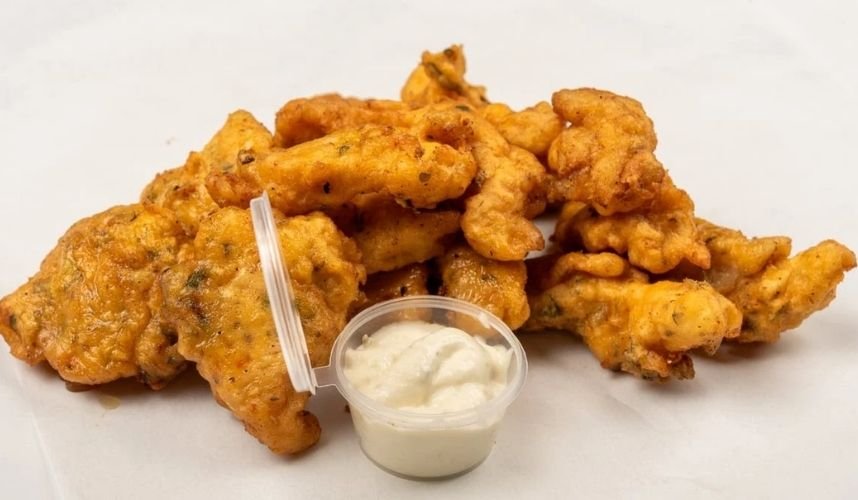
Adda
Restaurants · Auckland
Ajadz Indian Cuisine
Restaurants · Auckland
Akbar Durbar
Restaurants · Auckland
Akbar Durbar Indian Takeaway
Restaurants · Auckland
Ambar Sariya
Restaurants · Auckland
11.Temples, mandirs, gurdwaras and other places of worship
Correct or addContents ↑Auckland's Hindu and Sikh places of worship are spread across the region, most of them in the south and west. Bharatiya Mandir, the first purpose-built Hindu temple in New Zealand, is close to Sandringham; the Takanini gurdwara is the largest in the country; and ISKCON's temple is on a 100-acre property in the north-west. Addresses below come from each temple's own site where it has one, and otherwise from the listing named; confirm opening times by phone or on the temple's page before a first visit.
| Place | Address | What to know |
|---|---|---|
| Bharatiya Mandir | 252–254 Balmoral Road, Auckland | Started as a dream in 1986 and finished in June 1993: the first purpose-built Hindu temple in New Zealand. Mandir services, a library in the basement in Hindi, English and Gujarati, a community hall (Balmoral Hall) and activities for children, language, learning and computers |
| Shri Ram Mandir | 11 Brick Street, Henderson | West Auckland. Its own site lists the deities, trustees, a youth group, events and hall and pooja booking; the site was under maintenance in October 2026, with bookings and donations by contacting the priest |
| BAPS Shri Swaminarayan Mandir | 21 Barrhead Place, Avondale | Address from BAPS's contact details; phone before you go. BAPS holds Diwali and Annakut celebrations here |
| ISSO Shree Swaminarayan Mandir | 10–12 Wentworth Avenue, Papatoetoe | Swaminarayan temple run by the International Swaminarayan Satsang Organisation |
| Thiru Subramaniyar Aalayam (Māngere) | 69 Tidal Road, Māngere | Run by the New Zealand Hindu Temple Society (incorporated 1996) at Tidal Road since 2015. Open seven days, 10:00–13:00 and 18:00–21:00, with aarathi at 11:30 and 19:30 and Vel Abishegam every Tuesday |
| Sri Sri Radha-Giridhari Temple (Hare Krishna Auckland, ISKCON) | 1229 Coatesville Riverhead Highway, Kumeu | A 100-acre property about 30 minutes from the city, bought in 1978; the deities were installed at this site in 2004. Open to the public free of charge all year; the Kartik Deepotsava runs from 27 October to 24 November 2026, daily at 07:15 and 19:15 |
| Gurdwara Sri Kalgidhar Sahib (Takanini Gurdwara) | 70 Takanini School Road, Takanini | Run by the Supreme Sikh Society of New Zealand; opened on 13 March 2005 by Prime Minister Helen Clark, at a cost of NZ$6.5 million; the largest Sikh gurdwara in New Zealand |
| Gurdwara Sri Dasmesh Darbar | 158 Kolmar Road, Papatoetoe | New building opened in December 2011 |
| Gurdwara Sri Guru Teg Bahadur Ji | 24 Dunnotar Road, Papatoetoe | One of three gurdwaras Wikipedia lists in Papatoetoe |
| Sri Guru Singh Sabha | 127 Shirley Road, Papatoetoe | The third Papatoetoe gurdwara on that list |
| Sri Guru Nanak Dev Ji Gurdwara (Ōtāhuhu) | 120 Princes Street, Ōtāhuhu | Opened in 1986, near the town centre |
| Nanaksar Thath Isher Darbar | Great South Road, Manurewa (100 or 102, by two listings) | Organiser of the annual nagar kirtan on Great South Road |
| Begampura Gurdwara and Dukh Niwaran Sahib | 1/9 Vernon Street and 7/46 Broadway, Papakura | The Papakura gurdwaras |
| North Shore Gurdwara | 128 Sunnybrae Road, Hillcrest | The North Shore |
Notes
- Hindu worship. The Hindu places we could confirm are Bharatiya Mandir on Balmoral Road, Shri Ram Mandir in Henderson, the Swaminarayan mandirs in Avondale and Papatoetoe, the Murugan temple in Māngere and the ISKCON temple in Kumeu. The New Zealand Thirumurugan Temple is at 145 Church Street, Ōtāhuhu, and the Sri Ganesha Temple at 4 Dent Place, Papakura; the temples page lists 24 Auckland temples and gurdwaras with their addresses and hours.
- Swaminarayan. BAPS in Avondale is the first temple of the sect in New Zealand according to older coverage; the ISSO runs its own in Papatoetoe.
- Sikh Auckland has 28,401 people in the region at the 2023 census, and its gurdwaras are in Papatoetoe, Takanini, Ōtāhuhu, Manurewa and Papakura. Every gurdwara serves langar, a free vegetarian meal, to anyone who comes; cover your head and take your shoes off. The Supreme Sikh Society's site lists the Takanini gurdwara's milestones, its Sikh Heritage School and its sports complex.
- Christian and Muslim families. OpenStreetMap maps an Indian Orthodox church in the Henderson area (St Dionysius) and the Calvary Indian Assembly of God on Nikau Road in Ōtāhuhu; Islam is the religion of 6.9% of Papatoetoe and 6.4% of Ōtāhuhu at the 2023 census.
- A first Sunday. Bharatiya Mandir's hall, a gurdwara's langar and the Kartik lamps at the ISKCON temple are all open to a visitor with no introduction. They are also where you will meet people who know who is renting and who is hiring.
Every temple and gurdwara in New Zealand, with addresses and hours →
Hindu temples and gurdwaras near Auckland
From the Namaste Community directory, nearest to the centre first.
Bharatiya Mandir
Temples & gurdwaras · Auckland
Gurdwara Sahib North Shore
Temples & gurdwaras · Auckland
Shri Swami Narayan Mandir
Temples & gurdwaras · Auckland
Shri Shirdi Saibaba Mandir
Temples & gurdwaras · Auckland
Shree Sanatan Dharam Hanuman Mandir
Temples & gurdwaras · Auckland
Chinmaya Mission
Temples & gurdwaras · Auckland
12.Associations, the centenary of 1926, clubs and classes
Correct or addContents ↑Indian Auckland organises itself by region and language, and the structure is older than the suburbs. The New Zealand Indian Central Association (NZICA) was formed in 1926 with three branches, Auckland, the Country Section at Taumarunui and Wellington, and calls itself the only national Indian umbrella body. Its centenary falls in 2026: more than 600 guests gathered at Cordis Auckland on 28 February 2026 for a curtain-raiser, and members planted more than a thousand saplings, in photographs dated August.
The associations
- Auckland Indian Association — one of NZICA's three founding branches, based at the Mahatma Gandhi Centre, 145 New North Road in Eden Terrace, on a Mount Eden site it acquired in 1989. The centre hires out rooms and halls, the largest for up to 1,500 people, with parking for up to 130 cars, next to Mount Eden station and a bus route; OpenStreetMap also maps a Sri Radha Krishna Mandir at the same address.
- Indian Association (Manukau) New Zealand — the association for the south, which marked International Day of Yoga 2026 with the Consulate General.
- Pukekohe Indian Association — in an early Indian market-gardening settlement, at 55 Ward Street; Nehru Hall, built in 1953, was the first Indian community hall in New Zealand and the PIA Events Centre opened in 1999.
- Regional and language associations, which NZICA lists as associate members: the New Zealand Punjabi Cultural Association, New Zealand Kannada Koota, the Probasee Bengali Association of New Zealand, the Auckland Marathi Association, the New Zealand Telugu Association, Muthamil Sangam Auckland, the Auckland Malayali Samajam, the Telangana Association of New Zealand and the Auckland Tamil Association.
- Alumni and professional groups that appear on the Consulate General's events page include the IIT Alumni Association of New Zealand and the NZ Hindu Women Forum.
Sport, music and the press
The NZ Sikh Sports Complex at Takanini was inaugurated in 2021, and New Zealand's first Sikh Games were held at Bruce Pulman Park in Takanini. Cricket is played in clubs and parks across the region; ask the association nearest you for a team that needs a player. Dance, music and language classes run through the mandirs, gurdwaras and associations: Bharatiya Mandir lists activities for children, learning and language, and the Supreme Sikh Society a heritage school. The community's news comes from Indian Newslink and the Indian Weekender, two New Zealand news sites that carry community news, awards and notices from the associations.
Students
Most universities and colleges have South Asian student societies, and for an international student they are the most useful first contact: they know which landlords to avoid, which employers underpay and which professors take students into research. If yours does not answer, the student groups on Namaste Community are the next stop. Students should read the jobs guide on how a New Zealand degree now counts towards residence points.
13.The festival year in Auckland, 2026
Correct or addContents ↑Auckland's Indian calendar is Diwali, but it is not only Diwali: Navratri in October, Diwali and Annakut in November, Guru Nanak's gurpurab later that month, Holi and Vaisakhi in March and April, and the Thaipusam of the Tamil temples in January or February. The council festival is the public one; the temples, gurdwaras and associations run the rest, and each announces its own dates. What follows is what had been published as of 23 October 2026. The Auckland events page carries what is added later, and the Diwali page for Auckland gathers the Diwali events in one place.
| Festival or event | When (2026) | Where | Organiser |
|---|---|---|---|
| Northshore Diwali | Friday 23 October | Smales Farm, Takapuna | From Namaste's events import; check with the organiser |
| Pakuranga and Botany libraries' Diwali weeks | 22 October to 14 November | Pakuranga and Botany libraries | From Namaste's events import; check with the organiser |
| Kartik Deepotsava | 27 October to 24 November, daily at 07:15 and 19:15 | Sri Sri Radha-Giridhari Temple, Kumeu | ISKCON Auckland |
| BNZ Auckland Diwali Festival | Saturday 31 October and Sunday 1 November, 12pm to 9pm; free; fireworks from about 8:50pm | Aotea Square, city centre | Tātaki Auckland Unlimited, as an Auckland Council event |
| Diwali party | Saturday 31 October | Wharfside, Quay Street | From Namaste's events import; check with the organiser |
| Diwali | Sunday 8 November | Lakshmi Puja at home and at every mandir; Annakut at the Swaminarayan mandirs after | — |
| Guru Nanak Gurpurab | Around Tuesday 24 November (the full moon of Kartik; each gurdwara announces its programme) | Every gurdwara: kirtan and langar | The gurdwaras |
Diwali in Auckland, explained
The BNZ Auckland Diwali Festival is the city's own: a free weekend on Aotea Square with live street performances, projection shows and art installations, a Living Arts Centre, yoga and family activities, a marketplace of handmade crafts and clothing, food stalls serving pakora, pav bhaji and kulfi, and a public fireworks display from about 8:50pm. The organiser says it attracts over 65,000 people each year. Te Waihorotiu station on the East West and South City lines is about a three-minute walk from the square, and the Downtown ferry terminal about fifteen minutes. AT runs event transport for the festival, so check the Journey Planner on the day.
The festival comes a week before Diwali itself, which falls on Sunday 8 November. The family festival happens at home and in the mandirs that week; the gurdwaras mark Bandi Chhor Divas; the Swaminarayan mandirs hold Annakut on the day after. Mithai shops are busiest in the final week, so order early.
Fireworks
Diwali is not a public holiday in New Zealand. Private fireworks are legal, but shops may sell them only from 2 to 5 November each year, the Guy Fawkes window, which in 2026 falls in the week before Diwali. Check Auckland Council's rules on where you may let them off before you do, and treat the festival's own display as the safe option.
Through the year
- January–March: Thaipusam at the Māngere Murugan temple (a ten-day programme in January or February), Pongal and Makar Sankranti, Maha Shivaratri, and Holi in March.
- April: Vaisakhi falls in April. The Supreme Sikh Society's site lists nagar kirtans back to 2004, and the Nanaksar temple in Manurewa runs another in December.
- August: India's Independence Day, marked by the Consulate General and the associations.
- September–October: Ganesh Chaturthi, Navratri and Dussehra. Navratri this year ran from 11 to 19 October.
Cricket and Bollywood
India's cricket tours draw the community out: AT's event-transport list carried pages for Blackcaps against India T20 and one-day matches in 2026. For Bollywood nights, concerts and other events, the events near Auckland on Namaste Community are below as they are added.
Coming up in Auckland
Every event →- NOV8
Mantra Night - Kirtan Meditation evening
Sun, 8 Nov 2026, 18:00
Grey Lynn Community Centre
🙏 ReligiousFree - NOV10
Kirtan: Music n Mantra Guided Meditation
Tue, 10 Nov 2026, 18:00
The Loft Yoga Lounge
🙏 ReligiousFree - NOV14
Kantha Stitching on Handmade Fabric Paper
Sat, 14 Nov 2026, 10:00–13:00
Papatunga Studio - Te Tuhi
🎭 CulturalNZ$7.50 - NOV14
Diwali Celebration at Pakuranga Library: Spices & Chai
Sat, 14 Nov 2026, 13:30–15:00
Pakūranga Library
🍛 Food & Drink - NOV14
Red Room
Sat, 14 Nov 2026, 22:00 – Sun 03:00
Crown Shisha Lounge & Nightclub
🎭 CulturalNZ$20.05 - NOV15
Bollywood Dance Workshop with Utishtha - Sharara Sharara
Sun, 15 Nov 2026, 12:00–14:00
Kinetic Dance Studio
🎭 CulturalNZ$16.81


14.WhatsApp groups, and finding your people on Namaste Community
Correct or addContents ↑Indian Auckland runs on WhatsApp. There is a group for the volunteers of every temple, every university intake, every flat-share hunt in Papatoetoe, every language association, every cricket team, the Sandringham parents, the Flat Bush parents and every hospital's nurses — and Facebook groups called "Indians in Auckland" where newcomers ask for the links. This guide will not pretend otherwise: the groups are how the community has organised itself for years.
What the groups are good at, and what they are not
They are fast and generous. Ask at nine in the evening which GP in Takanini has a Punjabi-speaking doctor, or whether the East West line is running this weekend, and someone answers by ten. But you need to know someone to get in, the links that circulate are often dead, and the live ones are where the "room in Papatoetoe, no viewing, send the bond today" and "job at a factory, pay the agent first" messages start. A group of a thousand members has nobody checking who joined, so the same questions about GP enrolment and school zones are asked every January and the answers scroll away; every member can see your phone number; and a group has no idea where you live, so a shed in Pukekohe and a flat in Albany arrive with the same weight as the room down your road. Auckland is 1.66 million people, so "Auckland" in a group's name tells you very little.
What Namaste Community offers
Namaste Community is a community platform for Indians abroad, on the web and as an app. The app has groups, events and a directory, and on the website: - the local groups for this city are listed at /groups/in/new-zealand/auckland, with the ones near Auckland under this section; groups are moderated and tied to a place; - the events near Auckland — garba nights, Diwali parties, temple programmes, Bollywood nights — are on the Auckland events page; - the directory lists the grocers, restaurants, temples and services across New Zealand, and businesses can add themselves; - in Ask, members ask about paperwork, housing, schools and where to find a good dosa, and people who have been there answer — and you can post anonymously when the question is one you would rather not sign.
Your first week, practically
- Find the group for your suburb or your language on the Auckland groups page and read before you post; the GP and AT HOP questions are usually answered already.
- Pick one event in the next fortnight — a temple programme, the Diwali festival on Aotea Square, a cricket match — from the events page. It is the fastest way from "the Indian community in Auckland" as a phrase to three people whose names you know.
- Ask the question you actually have, and say where you live: the answer for Papatoetoe, Henderson and Pukekohe is rarely the same.
- Never send a bond, a passport scan or a fee to someone you met in a group without meeting them and checking who they are, and never pay for a job. Report anything that looks like a scam.
- When you have found your flat, your GP and your grocer, leave an answer or a review for the next person from Hyderabad, Ludhiana or Surat.
If the group you need does not exist yet — Malayali nurses at Middlemore, Telugu parents in Flat Bush, a Gujarati cricket team in Mount Roskill — start it, so the next person searching finds it here.
Groups in Auckland
All groups →🇳🇿 New Zealand-wide
For Indians and expats living in New Zealand.
14 members
15.Fijian Indian, Sri Lankan, Pakistani, Nepali and Bangladeshi neighbours in Auckland
Correct or addContents ↑Indian Auckland is shared every day with the region's other South Asian communities and with the Fijian Indian community, which sits inside the Indian group in the census but has its own history, food and language. Everything on this page about renting, GP enrolment, schools and transit applies identically to all of them; the differences are the high commission, the festival calendar and the shop you head for.
Fijian Indian
The 2023 census counted 23,808 people of Fijian Indian ethnicity in New Zealand, classed within the Indian group, and the community has its own history: its families went to Fiji generations ago, many left after the 1987 coups, and its everyday language is Fiji Hindi. Sandringham has "a substantial Indo-Fijian community" formed after 1987, its first Indian restaurant, Stan's, served Fijian-Indian food, and shops such as Fiji Mithai in Papatoetoe and Fiji Curry House in Ōtāhuhu continue the tradition.
Sri Lankan
At the 2023 census, 14,436 people in New Zealand named Sinhalese ethnicity, 4,221 Sri Lankan Tamil and a further 5,100 gave Sri Lankan without saying which. Auckland Council's summary shows Sri Lankans at 2.4% of the region's 518,178 Asian residents — about 12,400 people by our arithmetic. Sandringham Road has Sri Lankan food at St Anthony's Food and Spice Magic, and The Spinoff described Oum Pillaiyar Trader there as selling coconut sambol and vegetarian Sri Lankan curries.
Pakistani and Afghan
The census counted 8,094 Pakistani New Zealanders. In Auckland, Pakistanis are 1.0% and Afghans 1.1% of the Asian group, roughly 5,200 and 5,700 people. They share the halal butchers of Sandringham and Papatoetoe with Indian Muslims, and Urdu and Punjabi are common ground. Pakistan's Independence Day, 14 August, falls the day before India's.
Nepali and Bangladeshi
There were 6,948 Nepali and 3,552 Bangladeshi New Zealanders in 2023, and neither reaches the 1% line in Auckland Council's summary of the Asian group, which lists only groups at 1% or more. Tihar, the Nepali festival of lights, falls at about the time of Diwali, and the Probasee Bengali Association is one of NZICA's associate members.
Shared ground
Sandringham Road, the Papatoetoe shops, the cricket pitches, the university societies and the Diwali crowd on Aotea Square are where the flags mix most easily. Political quarrels from home do reach Auckland from time to time, but the ordinary experience is a Fijian Indian landlord, a Punjabi GP, a Pakistani butcher and a Sri Lankan restaurateur on the same street, and a city that takes that for granted.
16.The Indian consulate, help lines and staying safe
Correct or addContents ↑Consular services
Indian citizens in Northland, Auckland and Waikato apply at the Consulate General of India, Auckland, on Level 14, SAP Tower, 151 Queen Street, Auckland 1010. Residents of the rest of New Zealand, and of Samoa, Niue, Vanuatu and the Cook Islands, use the High Commission of India in Wellington (72 Pipitea Street, Thorndon). The Consulate General's office hours are Monday to Friday, 09:00 to 17:30, with applications and documents accepted between 09:30 and 12:30 and delivered between 16:00 and 17:00; emergency submissions are taken from 14:00 to 16:00 with documentary evidence. It prefers email — [email protected] for passports, visas and OCI — and says it does not give status updates by phone or email; use the online status link. Its 24-hour line, +64 21 222 7651, is for death and medical emergencies only.
Apply on the portals (passport, visa or OCI) with an email address that is not tied to another Indian mission, and apply only at the mission whose jurisdiction you live in. Documents are lodged at the consulate itself; we found no outsourced application centre named on its pages in October 2026, unlike in some other countries, so confirm on its site before you travel. Since 1 September 2025 only ICAO-compliant photographs are accepted. For a passport, the High Commission's page lists the fees from 1 July 2026, in New Zealand dollars:
| Passport service | Fee (NZ$) |
|---|---|
| Re-issue, 36 pages | 214 |
| Re-issue, 60 pages | 298 |
| Re-issue for a minor up to 15 | 156 |
| Fresh passport for a child born in New Zealand, with birth registration | 179 |
| Lost or damaged passport, 36 pages | 424 |
| Lost or damaged passport, 60 pages | 508 |
| Emergency Certificate | 30 |
The page says to allow up to 30 days from receipt of all required documents, and calls that indicative. Police Clearance Certificate applications go by courier or in person, and in-person visits are by prior appointment only. The consulate's "Book Your Appointment Online" page and its FAQs on OCI matters are the places to start; the OCI rules are national and are not repeated here.
Help lines
- 111 for police, fire and ambulance in an emergency; 105 is the police non-emergency line.
- Healthline, 0800 611 116, free 24-hour nurse advice; 1737, free call or text day and night to talk to a counsellor.
- MBIE, 0800 200 088, to report migrant exploitation, including being asked to pay for a job; Crimestoppers, 0800 555 111, to report it anonymously.
- Tenancy Services and the Tenancy Tribunal for rent, bond and repairs, and your community law centre for free legal advice.
Safety, honestly
Auckland has the problems of any large city. Three dangers are specific to the community and worth saying plainly.
- Paying for a job. The June 2026 ruling that an Auckland company repay NZ$44,750 taken from a migrant worker is the rule of thumb: nobody may charge you for a job or for a visa letter, and Immigration New Zealand will decline a visa if you or your agent offered money to an employer.
- Rental fraud. A house at half the going rate, a landlord abroad, a bond requested before a viewing: see renting for the checks.
- Hostility towards the community. On Saturday 20 December 2025 a Sikh nagar kirtan organised by the Nanaksar Sikh temple, with the permissions of the council, police and traffic management, was confronted on Great South Road in Manurewa by about 50 members of a group calling itself the True Patriots of New Zealand, which reports link to Destiny Church. The protesters performed a haka in front of the procession and carried a banner reading "This is New Zealand, not India". Police stood between the two groups and the procession continued; no injuries or arrests were reported, and police said they would protect lawful religious practice. We found no report of charges. Sikh bodies in New Zealand and India condemned the protest. We found it reported as a single incident; the Diwali festival on Aotea Square, by contrast, draws more than 65,000 people a year.
Staying well, and what to read next
Keep your e-Visa letter, your passport copy and your tenancy agreement where you can find them. The national rules on work and visas are in the jobs guide, the Auckland groups and events are on Namaste Community's Auckland groups and events pages, and the businesses near you are in the New Zealand directory.
Questions people ask
- How many Indians live in Auckland?
- 175,794 people in the Auckland region gave Indian as one of their ethnic groups at the 2023 census — 10.6% of Aucklanders, up from 154,824 in 2018, and about three in five of the 292,092 people of Indian ethnicity in New Zealand. The census counts the ethnicity people choose, whatever their birthplace or passport, and a person can name more than one, so the figure includes Fijian Indians (23,808 nationally) and New Zealand-born Indians. It does not count people who arrived after census night, 7 March 2023.
- Where do most Indians live in Auckland?
- In the south and on the isthmus. Stats NZ’s 2023 tables, as summarised by Wikipedia, give the highest Indian shares in the Ōtara-Papatoetoe local board (25.2%), Puketāpapa, which is Mount Roskill (22.6%), and Papakura, which includes Takanini (21.5%). Papatoetoe, Sandringham, Mount Roskill, Ōtāhuhu, Manukau, Takanini and Flat Bush are the suburbs this guide covers, with Henderson in the west and Pukekohe to the south.
- Where is Little India in Auckland?
- Two places claim the name. Sandringham Road in Sandringham, about seven kilometres from the city centre, has the Indian restaurants, small supermarkets and halal butchers, including Satya. Papatoetoe, whose Hunters Corner shopping area has about 60 shops, roughly 40 of them with an Indian flavour, is described as New Zealand’s little India, and about 40% of its residents were of Indian ethnicity at the 2018 census.
- What is the average rent in Auckland in 2026?
- On the Ministry of Business, Innovation and Employment’s bond data for 1 March to 31 August 2026, the median weekly rent was NZ$450 in Ōtāhuhu, NZ$580 in Papatoetoe and Sandringham, NZ$595 in Henderson, NZ$650 in Mount Roskill, NZ$660 in Takanini and NZ$720 in Flat Bush. Asking rents are higher: Trade Me’s Auckland median was NZ$660 in August and Barfoot & Thompson’s average NZ$699.40 in September.
- How much is a bond in New Zealand, and what are the tenancy rules?
- A landlord can charge at most four weeks’ rent as a bond and must lodge it with Tenancy Services; a pet bond of up to two weeks is allowed in some cases. Rent in advance is limited to two weeks, letting fees are banned, rent can rise at most once every 12 months with 60 days’ written notice, and a landlord can end a periodic tenancy with 90 days’ notice without a reason (42 days if the owner or a family member will move in).
- How much is public transport in Auckland in 2026?
- Since 1 February 2026 an adult AT HOP or contactless fare is NZ$3.00 for one zone, NZ$4.90 for two, NZ$6.50 for three and NZ$7.90 for four or more. AT HOP card users pay no more than NZ$50 in 7 days and contactless users no more than NZ$20 a day; concessions of 40% or 50% need a registered AT HOP card. A card costs NZ$5.
- Has the City Rail Link opened?
- Yes. The City Rail Link opened to the public on Sunday 13 September 2026, with new Te Waihorotiu and Karanga-a-Hape stations and a rebuilt Maungawhau. The East West line (Swanson to Manukau) and the South City line (Pukekohe to Newmarket and the city loop) each run every 15 minutes off-peak and about every 10 at peak, according to Auckland Transport.
- Can I use the public health system on a work visa?
- Yes, if your work visa lets you stay in New Zealand for two years or more (the visa counts from your first day in the country), or your total lawful time here reaches two years. Children aged 17 or under in the care of an eligible parent are covered; partners must qualify themselves, except for maternity services. Students and holders of shorter visas are not eligible. Enrol with a general practice to get reduced fees, and take your e-Visa letter as proof.
- Do children of work visa holders pay school fees in Auckland?
- Not if the parent holds a current work visa: under the Education (Domestic Students) Notice 2026 such a child is a domestic student for the length of the parent’s visa, and state school is free from age five to nineteen. The child still needs a visa that allows study, normally the Dependent Child Student Visa (from NZ$750), and for an Accredited Employer Work Visa holder that depends on income and the job. University study is charged at international rates.
- Where are the main Hindu temples in Auckland?
- Bharatiya Mandir at 252–254 Balmoral Road, the first purpose-built Hindu temple in New Zealand (completed in 1993); Shri Ram Mandir at 11 Brick Street, Henderson; BAPS Shri Swaminarayan Mandir at 21 Barrhead Place, Avondale; the ISSO Swaminarayan mandir at 10–12 Wentworth Avenue, Papatoetoe; Thiru Subramaniyar Aalayam at 69 Tidal Road, Māngere; and the ISKCON temple at 1229 Coatesville Riverhead Highway, Kumeu.
- Where are the gurdwaras in Auckland?
- The largest is Gurdwara Sri Kalgidhar Sahib at 70 Takanini School Road, opened in 2005 and run by the Supreme Sikh Society of New Zealand. Papatoetoe has three, on Kolmar Road, Dunnotar Road and Shirley Road; Ōtāhuhu has one on Princes Street; there are others in Manurewa, Papakura, Dannemora, New Lynn and Hillcrest. The Auckland region had 28,401 Sikhs at the 2023 census.
- When is Diwali 2026 in Auckland, and where are the celebrations?
- Diwali is Sunday 8 November 2026. The free BNZ Auckland Diwali Festival is on Aotea Square on Saturday 31 October and Sunday 1 November, 12pm to 9pm, with a fireworks display from about 8:50pm. Northshore Diwali at Smales Farm is on 23 October, and ISKCON’s Kartik lamps at Kumeu run from 27 October to 24 November. Fireworks can be sold only from 2 to 5 November.
- Where is the Indian consulate in Auckland, and do I apply in Wellington?
- People who live in Northland, Auckland or Waikato apply at the Consulate General of India, Level 14, SAP Tower, 151 Queen Street (applications are accepted 09:30–12:30 on weekdays); everyone else in New Zealand uses the High Commission in Wellington. A 36-page passport re-issue costs NZ$214 from 1 July 2026, and processing takes up to 30 days from receipt of all documents.
- Is there a direct flight from India to Auckland?
- We found no nonstop flight in October 2026. Air India and Air New Zealand agreed a codeshare in March 2025 that connects through Sydney, Melbourne or Singapore, and said they would examine a direct service by 2028. Check both airlines’ schedules before you book.
Sources
The official pages this guide was checked against on October 23, 2026. When they and this page disagree, they win.
- Immigration New Zealand — India Skilled Work Visa (opened 20 October 2026)www.immigration.govt.nz/visas/india-skilled-work-visa/
- Stats NZ — 2023 Census ethnic group summaries: Indiantools.summaries.stats.govt.nz/ethnic-group/indian
- Stats NZ — 2023 Census: Auckland region (regional infographic)www.stats.govt.nz/assets/2023-Census/Detailed-regional-infographics/English-copy-of-Detailed-infographic-about-the-Auckland-region.pdf
- Auckland Council (Knowledge Auckland) — 2023 Census results: Asian ethnicity in Auckland (November 2024)knowledgeauckland.org.nz/media/z3pjptmq/asian-2023-census-summary-auckland.pdf
- RNZ via Scoop — Census 2023: Indians now the third-largest ethnic group (3 October 2024)www.scoop.co.nz/stories/AK2410/S00112.htm
- Figure.NZ (Stats NZ data) — Indian people in New Zealand by city, 2023 Censusfigure.nz/chart/XyVS4PHKF2nhPxlx
- Figure.NZ (Stats NZ data) — Asian population in New Zealand by detailed ethnic group, 2023 Censusfigure.nz/chart/M9yJKFEHL90pPyH1
- Indian New Zealanders (history, 2023 census figures, local-board shares)en.wikipedia.org/wiki/Indian_New_Zealanders
- Hinduism in New Zealand (2023 Hindu count, Auckland temples)en.wikipedia.org/wiki/Hinduism_in_New_Zealand
- Sikhism in New Zealand (2023 Sikh counts, list of Auckland gurdwaras)en.wikipedia.org/wiki/Sikhism_in_New_Zealand
- Auckland (2023 census population, airport passengers, University of Auckland)en.wikipedia.org/wiki/Auckland
- Sandringham, Auckland (2023 census, Little India, Indo-Fijian community)en.wikipedia.org/wiki/Sandringham,_Auckland
- Papatoetoe (2023 census, Hunters Corner, stations)en.wikipedia.org/wiki/Papatoetoe
- Mount Roskill (2023 census)en.wikipedia.org/wiki/Mount_Roskill
- Flat Bush (2023 census, growth)en.wikipedia.org/wiki/Flat_Bush
- Takanini (2023 census, South City line, NZ Sikh Sports Complex)en.wikipedia.org/wiki/Takanini
- Ōtāhuhu (2023 census)en.wikipedia.org/wiki/%C5%8Ct%C4%81huhu
- Henderson, New Zealand (2023 census)en.wikipedia.org/wiki/Henderson,_New_Zealand
- Pukekohe (2023 census, Indian settlement history, electric trains)en.wikipedia.org/wiki/Pukekohe
- Te Ara — Indian-owned dairies, Auckland, 1994teara.govt.nz/mi/map/25497/indian-owned-dairies-auckland-1994
- Tenancy Services (MBIE) — Market rent, by suburb (1 March to 31 August 2026, opened 23 October 2026)www.tenancy.govt.nz/rent-bond-and-bills/market-rent/
- Tenancy Services — Charging a general bond (four weeks’ rent)www.tenancy.govt.nz/rent-bond-and-bills/bond/charging-a-bond/charging-a-general-bond/
- Tenancy Services — Charging a pet bond (two weeks’ rent, from 1 December 2025)www.tenancy.govt.nz/rent-bond-and-bills/bond/charging-a-bond/charging-a-pet-bond/
- Tenancy Services — Charging rent (rent in advance)www.tenancy.govt.nz/rent-bond-and-bills/rent/charging-rent/
- Tenancy Services — Increasing rent (12 months, 60 days’ notice)www.tenancy.govt.nz/rent-bond-and-bills/rent/increasing-rent/
- Tenancy Services — Letting fees and key moneywww.tenancy.govt.nz/rent-bond-and-bills/letting-fees-and-key-money/
- Tenancy Services — Ending a periodic tenancy (21, 42 and 90 days)www.tenancy.govt.nz/ending-a-tenancy/giving-notice-to-end-tenancy/ending-a-periodic-tenancy/
- Tenancy Services — Healthy homes standardswww.tenancy.govt.nz/healthy-homes/
- Trade Me Property — Rental Price Index, August 2026 (25 September 2026)www.trademe.co.nz/c/property/news/rental-price-index
- MPA (NZ Adviser) — Auckland rents flat at $699 (Barfoot & Thompson, September 2026; 9 October 2026)www.mpamag.com/nz/specialty/residential/auckland-rents-flat-at-699-despite-busiest-rental-month-since-march/592945
- Numbeo — Cost of living in Auckland (updated 21 October 2026)www.numbeo.com/cost-of-living/in/Auckland
- Auckland Transport — Public transport fare changes 2026 (fares from 1 February, caps, concessions)at.govt.nz/farechanges
- Auckland Transport — simplified fare structure and annual adjustment (2025 media release)at.govt.nz/about-us/news-events/media-centre/2025-media-releases/auckland-transport-simplifies-fare-structure-and-announces-annual-adjustment
- Auckland Transport — Buy an AT HOP card (NZ$5, vending machines)at.govt.nz/bus-train-ferry/at-hop-card/buy-at-hop-card
- Auckland Transport — Discounted fares (40% and 50% concessions, SuperGold)at.govt.nz/bus-train-ferry/fares-and-discounts/discounted-fares
- Auckland Transport — Paying with an AT HOP card and contactlessat.govt.nz/bus-train-ferry/at-hop-card/paying-with-at-hop-card
- Auckland Transport — East West lineat.govt.nz/bus-train-ferry/train-services/east-west-line
- Auckland Transport — South City lineat.govt.nz/bus-train-ferry/train-services/south-city-line
- Auckland Transport — Frequent buses on key routesat.govt.nz/bus-train-ferry/bus-services/frequent-buses-on-key-routes
- Auckland Transport — Airport services (AirportLink, Route 38, Puhinui)at.govt.nz/bus-train-ferry/bus-services/airport-services
- Auckland Transport — Beat fuel prices with public transport (fuel supply response, 10 May 2026)at.govt.nz/about-us/news-events/fuel-supply-response
- City Rail Link — opened to the public on 13 September 2026www.cityraillink.co.nz/
- City Rail Link (opening, lines, first-week boardings)en.wikipedia.org/wiki/City_Rail_Link
- Bernama — New Zealand petrol prices hit highest level since the West Asia conflict (5 October 2026)bernama.com/en/news.php?id=2615692
- Xinhua via The Star — New Zealand petrol, diesel prices rise in September (16 October 2026)www.thestar.com.my/news/world/2026/10/16/new-zealand-petrol-diesel-prices-rise-in-september
- Skift — Air India and Air New Zealand codeshare, direct flights by 2028 (20 March 2025)skift.com/2025/03/20/air-india-air-new-zealand-ink-codeshare-deal-eye-direct-flights-by-2028/
- Immigration New Zealand — Accredited Employer Work Visa (fee, processing time, scam warning)www.immigration.govt.nz/visas/accredited-employer-work-visa/
- Immigration New Zealand — Skilled Migrant Category Resident Visa (three pathways)www.immigration.govt.nz/visas/skilled-migrant-category-resident-visa/
- Employment New Zealand — the minimum wage is increasing on 1 April 2026www.employment.govt.nz/news-and-updates/minimum-wage-is-increasing-on-1-april-2026
- Employment New Zealand — Auckland company charged a migrant worker almost $45,000 for his job (3 June 2026)www.employment.govt.nz/news-and-updates/auckland-company-charged-migrant-worker-almost-45000-for-his-job
- Immigration New Zealand — update on the exploitation of Indian and Bangladeshi nationals in Auckland (5 September 2023)www.immigration.govt.nz/about-us/news-centre/update-investigation-underway-into-the-exploitation-of-indian-and-bangladeshi-nationals-in-auckland
- High Commission of India, Wellington — India–New Zealand FTA to enter into force on 20 October 2026www.hciwellington.gov.in/
- AAP via The Senior — NZ–India trade deal to come into force on 20 October (21 September 2026)www.thesenior.com.au/story/9354666/nz-india-trade-deal-to-come-into-force-on-20-october/
- Health New Zealand — eligibility for publicly funded health care (work visas, children, partners, 1 December 2026)www.healthnz.govt.nz/hospitals-services/eligibility-subsidies/publicly-funded-healthcare
- Ministry of Health — eligibility for publicly funded health services (2026 regulations)www.health.govt.nz/regulation-legislation/eligibility-for-publicly-funded-health-services
- govt.nz — Healthcare if you’re in NZ on a work visawww.govt.nz/browse/health/public-health-services/healthcare-on-a-work-visa/
- Immigration New Zealand — Who can get public health care (GP enrolment, children, ACC)www.immigration.govt.nz/live/setting-up-your-life-in-new-zealand/getting-health-care-and-finding-a-doctor/who-can-get-public-health-care/
- Immigration New Zealand — Visa Pak 2016: work visa requirements for publicly funded health serviceswww.immigration.govt.nz/formshelp/visa-paks/2016-may-20-work-visa-requirements-for-publicly-funded-health-services
- Ministry of Education — Education Circular 2020/08: domestic and international students (updated 15 October 2026)www.education.govt.nz/our-work/publications/education-circulars/education-circular-202008
- Immigration New Zealand — Dependent Child Student Visa (fee, decision time, school fees)www.immigration.govt.nz/visas/dependent-child-student-visa/
- Immigration New Zealand — operations manual U8.20, dependent children of work visa holders (version of 8 December 2025)www.immigration.govt.nz/opsmanual/89032.htm
- govt.nz — How to enrol your child at school in NZwww.govt.nz/browse/education/school-and-college/how-to-enrol-your-child-at-school-in-nz/
- The Spinoff — Sandringham’s South Asian flavour and gentrification (July 2024)thespinoff.co.nz/kai/07-07-2024/can-sandringhams-south-asian-flavour-survive-gentrification
- Satya restaurants — Sandringham, Ponsonby and the Chai Loungessatya.co.nz/
- Bikanervala NZ — about us (first Auckland store, 7 April 2008)www.bikanervala.co.nz/about-us/
- OpenStreetMap contributors — Indian food shops, restaurants and places of worship in Auckland, as mapped on 22 October 2026www.openstreetmap.org/
- Bharatiya Mandir NZ — our historywww.bharatiyamandir.org.nz/our-history/
- Bharatiya Mandir NZ — contact (252–254 Balmoral Road)www.bharatiyamandir.org.nz/contact-us/
- Shri Ram Mandir, Hendersonwww.shrirammandir.org.nz/
- NZ Hindu Temple Society — Thiru Subramaniyar Aalayam, Māngere (timings, history)www.aalayam.co.nz/
- Hare Krishna Auckland — visit the Sri Sri Radha-Giridhari Temple, Kumeuwww.harekrishna.org.nz/
- ISKCON News — ISKCON Auckland celebrates the 20th anniversary of its temple (25 February 2024)iskconnews.org/iskcon-auckland-celebrated-20th-anniversary-of-sri-sri-radha-giridhari-temple/
- BAPS Shri Swaminarayan Mandir, Aucklandwww.baps.org/auckland
- Shri Swaminarayan Mandir, Auckland (ISSO, Wentworth Avenue, Papatoetoe)en.wikipedia.org/wiki/Shri_Swaminarayan_Mandir,_Auckland
- Takanini Gurdwara (Gurdwara Sri Kalgidhar Sahib)en.wikipedia.org/wiki/Takanini_Gurdwara
- Supreme Sikh Society of New Zealandwww.supremesikhsociety.co.nz/
- Indian Newslink — Brian Tamaki’s group disrupts nagar kirtan procession in Auckland (21 December 2025)indiannewslink.co.nz/brian-tamaki-s-group-disrupts-nagar-kirtan-procession-in-auckland
- Waatea News — Sikh parade in South Auckland disrupted by haka-performing protesters (23 December 2025)waateanews.com/2025/12/23/sikh-parade-in-south-auckland-disrupted-by-haka-performing-protesters-linked-to-brian-tamaki/
- New Zealand Indian Central Association (founded 1926, member associations, centenary)nzica.org.nz/
- Auckland Indian Association — Mahatma Gandhi Centre, 145 New North Road (listing)www.uptown.co.nz/businesses/auckland-indian-association
- Indian Newslink — community newsindiannewslink.co.nz/
- Indian Weekender — community newswww.indianweekender.co.nz/
- Tātaki Auckland Unlimited — BNZ Auckland Diwali Festival, 31 October – 1 November 2026www.aucklandnz.com/diwali
- Consulate General of India, Auckland — home page (jurisdiction, notices)www.cgiauckland.gov.in/
- Consulate General of India, Auckland — contact (address, emergency line, email)www.cgiauckland.gov.in/page/contact/
- Consulate General of India, Auckland — working hours and public hourswww.cgiauckland.gov.in/page/working-hours/
- Consulate General of India, Auckland — police clearance certificates and appointmentswww.cgiauckland.gov.in/page/for-indian-passport-holders/
- High Commission of India, Wellington — passport services, jurisdiction and fees from 1 July 2026www.hciwellington.gov.in/page/passport-services/
Your case is different? Ask people who’ve been through it
Members near you have dealt with this themselves. Ask under your name or anonymously — answers come by email.
Ask the community — freeEverything in Auckland that this page cannot keep current — events this week, groups near you, businesses with reviews — is in the app, ranked by distance.
Namaste Community — the Indian expat community, near you. Free to join, works in every country.
More guides
Indians in New Zealand: the 2026 guide to visas, settling in, Auckland, Wellington, Hamilton and Christchurch
Checked October 23, 2026
Jobs in New Zealand for Indians (2026): the AEWV, the Green List, residence, pay and the honest odds
Checked October 10, 2026
Indians in Wellington: the 2026 guide to Kilbirnie, Newlands, Johnsonville, Naenae, Lower Hutt, Porirua and Tawa
Checked October 23, 2026